Econundrum: Household Conservation Smackdown

| Mon Oct. 5, 2009 3:00 AM PDT
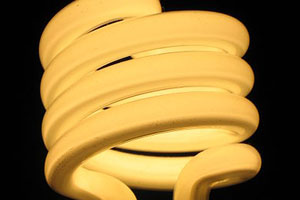
cfl-lightbulb-300x200.jpg

Q: If I could only choose one thing to do in my lifetime to reduce my carbon footprint, what should it be?

A: Switch out your bulbs. Insulate your house. Recycle. Cinderelly, Cinderelly. Frankly, it’s all a little overwhelming. Wouldn't it be great to know which personal conservation activities get you the most carbon-reducing bang for your buck? Researchers at Oregon State University calculated the lifetime impact of a few popular ones. Here’s what they found:

  • Recycling newspaper, magazines, glass, plastic aluminum, and steel cans: 19 tons of CO2 saved
  • Replacing old refrigerator with energy-efficient model: 21 tons saved
  • Replacing ten 75-w incandescent bulbs with 25-w Energy-efficient lights: 40 tons saved
  • Replace single-glazed windows with energy-efficient windows: 133 tons saved
  • Reducing miles driven from 231 to 155 per week: 162 tons saved
  • Increasing car’s fuel economy from 20 to 30 mpg: 163 tons saved

So: If you can't afford to replace your fridge (or you're emotionally attached to your avocado green late '70s model), drive 10 fewer miles a week. If you rent and can't persuade your landlord to upgrade your windows, drive 62 fewer miles a week (um, time to buy a bike).

The bottom line: Keep recycling. Switch out those lightbulbs. But whatever you do, cut down on your car time, and if you must drive, do it in a fuel-efficient car.

 

Advertisement

Advertisement

Kiera Butler is an associate editor at Mother Jones. For more of her stories, click here.

Get Mother Jones by Email - Free. Like what you're reading? Get the best of MoJo three times a week.

Comments

The ONE thing to do to reduce carbon footprint

tagged as: 

What a disappointing, lightweight response. The ONE thing that outweighs all other things ten-thousand-fold is to limit reproduction to, at most, one child (preferably none).

Meat

Eating less meat is very big. I don't have the stats right now, but it's right up there with the cars.

meat, redux

Eating meat is actually past the cars --- the meat production industry creates a greater carbon footprint than the ENTIRE transportation industry combined. But when you're talking about a bunch of people who find dealing with their lightbulbs "a little overwhelming" you're talking about people who lack the capacity for genuine change. Just keep singing the same old same old: Lightbulbs! Recycling! Hooray for us!

Meat

Meat is the most resource-intensive food on the table and eating less of it can be the single most green move a person makes. Producing meat requires huge amounts of water, grain, land, and other inputs including hormones and antibiotics, and leads to pollution of soil, air, and water. A pound of beef requires around 12,000 gallons of water to produce, compared to 60 gallons for a pound of potatoes.

If you’re a meat eater, try cutting out a serving of meat each week ( visit Meatless Monday). Going vegetarian or vegan is a profoundly meaningful environmental choice.

Every day is Earth Day.

And let's not forget COWS

And let's not forget COWS PRODUCE METHANE, lots of it because they FART so much. Methane is many times more heat trapping then CO2, and that is why the cattle industry must be addressed, and yes we should stop eating BEEF or at least minimize the amount of BEEF we eat. (add : the cattle/ methane problem was not even mentioned in "The Inconvenient Truth" !!! --there's only one thing more "inconvenient" to tell the American public and that is that they eat way too many hamburgers!!!)

Here's a good argument :
http://www.earthsave.org/news/earthsave_global_warming_report.pdf

Hey this is Mother Jones!

NEXT : I think it was Jerry Mander of the IFG that said, it is actually more conservation minded to buy a good used car, then to buy a new car, even if it is a hybrid--The manufacturing of a new car is as taxing on the environment as all the CO2 saved by driving a hybrid. Think about where all those materials and particularly that of all the BATTERIES in a hybrid come from, and how much CO2 is produced in the making of a new car!!!

MJ, how about encouraging people to think?

Next- Anyone that pays an electricity bill and can do arithmetic knows you can save electricity by using compact fluorescent bulbs, THE PROBLEM IS THAT they have MERCURY inside, this creates another horrible environmental problem, both for people in the work place and at the disposal site, and is a potential hazard in the home. Le's discourage the use of compact fluorescent bulbs, and encourage the new LED lights so they will become mainstream and more affordable.

C'mon M Jones!

Source for your numbers

Where did you get these numbers? I know that you referenced "researchers at Oregon State University." But, why not state their names? It would be helpful to have referenced an actual publication or website where readers can verify this information and learn more about how (and when) these calculations were made.

What is most interesting is

What is most interesting is that ad for T. Boone Pickens, the biggest rat in the U.S. trying to take over all water rights via eminent domain for his wind farm extravaganza.
What a joke.

hottiffanyshop

Despite all the life danger, with one selfless act from one common person, someone is saved, A hero is made.

gucci necklace
Gucci Jewelry Necklaces

Think Global, and Keep it In Your Pants

Finally, someone mentions population control. It is greenwash to suggest you can have a sizable family, but be green. Nothing increases your footprint like more feet.

How many MoJo correspondents

How many MoJo correspondents does it take to change a lightbulb? I don't know it’s just sooooo overwhelming!! Please, can we talk about how to make real changes, not just easy ways to make ourselves feel better about being the world’s most heinous over-consumers?

Reducing family size is a great start; choosing to have fewer children ourselves and supporting programs to give women around the world access to birth control is one of the most effective ways to reduce the demand on global resources.

Reducing water consumption is also of utmost importance; considering that North Americans use almost 5 times the world’s average. If we’re going to talk about appliances, don’t forget that changing out old toilets and top loading washing machines will also make an impact.

As for driving, yes driving a couple miles a week less is great. How about not driving at all? I quit years ago, and it feels great not to complain about gas prices, or insurance rates or traffic. It’s not an option for everyone but why not try carpooling? When I stand at the bus stop I count the number of passengers in every vehicle that passes me by, 29 times out of 30 there is a single person driving a car that can fit 5. Most of these are crawling to work in the downtown core; now I’m no mathematician but wouldn’t it be faster if there were fewer cars on the road?

Others have mentioned it, but choosing to eat a vegetarian diet reduces water consumption dramatically when you consider that a kg of beef takes 13, 000 L of water to produce and a kg of grain between 1000- 1500 L (not to mention the grain it takes to feed the animals that could be feeding people).

And what about our obsession with having the newest gadgetry? North Americans replace cell phones on average every 18 months, even if they are not broken; the majority of those head straight to the dump. The same is true for laptops, PCs and a myriad of other electronic products; the result is a 32 fold consumption rate of oil and metal resources compared to developing countries. I shudder to think what will result when these countries have “developed” our voracious appetite for resources as well. Moving away from oil and consumables and moving towards renewable resources will also contribute to conservation. If we’re talking about things to do at home, why not install a few solar panels, or an on-demand hot water system and keep using products until they they have lost their functionality, not just their cool.

We must lead by example. Sure recycling newspapers, magazines and plastic bottles saves our carbon footprint, but what would we save if we didn’t buy them in the first place? Despite what the economists and advertising agents tell us, excess consumer spending doesn’t equate to happiness or economic stability, and is a certain recipe for environmental disaster.

We are faced with big problems that require big changes to our daily routines, which will require more than changing a couple of light bulbs; the alternative could be complete global collapse. Now THAT'S a little overwhelming.

http://www.banat2.net

When only the environmentally unconscious have kids. . .

Is having kids the worst thing you can do for the enviroment? Definitely.

However, if only people who don't care for the environment have kids, there won't be many kids growing up to care for the environment.

birth control

The birthrates for some third world countries averages seven for a woman over a lifetime. If we improve the mortality rate and nothing to reduce the birthrate we are creating another catastrophe.

The planet is straining at current population levels. And, as countries like China follow the American lead of hyper-consumerism, the problems will only escalate.

Educating and providing birth control to the impoverished around the globe must be a priority.

“Energy efficiency is not

“Energy efficiency is not only the cheapest form of energy, it’s also the cleanest,” said Ian Bowles, state secretary of Energy and Environmental Affairs. “So put energy costs in a half nelson and give a body slam to greenhouse gases.”

Post new comment

Alternately, you may login to or register an account
The content of this field is kept private and will not be shown publicly.
  • Web page addresses and e-mail addresses turn into links automatically.
  • Allowed HTML tags: <a> <ul> <ol> <li> <blockquote>
  • Lines and paragraphs break automatically.

More information about formatting options

MoJo Comments: Send Us Your Feedback

We changed our spam software to better filter comments. Should you encounter any issues, please let us know.

Photo Essays

The chaos and humanity of war.
What becomes of Janesville, Wisconsin, now that GM's left town?
The other side of Gitmo.
American Holidays