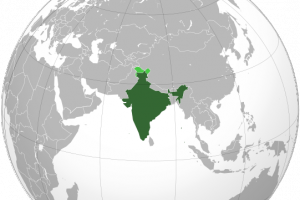
India Stands to Lose Most at Copenhagen

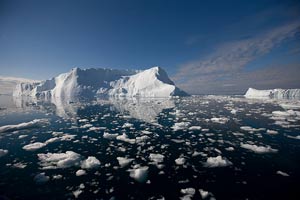
Few countries have as much to lose from global climate change as India. The nation's water supply is largely dependent on rainwater from the Asian Monsoon and meltwater from Himalayan glaciers. Both are severely threatened in a changing climate.
Yet today Prime Minister Manmohan Singh said that India will not sacrifice its development for a new climate change deal in Copenhagen. Sadly, Singh is following a long line of short-sighted leaders failing to see that development will be not only arrested but reversed in the severe climate change scenarios looming if Copenhagen fails to yield a consequential decision.
In the next issue of MoJo, due on the stands in a few days, Bill McKibben writes that Copenhagen will be the most important diplomatic gathering in the world's history. The truth is, few people are more dependent on its outcome than the people of India—the 1 in 7 on Earth who will suffer more than you and me—even though my country produced the majority of greenhouse gases plaguing the world now.
Why? Because 1.2 billion Indians are already living at the far edge of their nation's ability to provide. There is not a molecule of buffer zone built into their supplies of water and food.
It's unfair. India should not have to sacrifice its development because my country got its development. But planetary systems are dispassionate and indiscriminate. They will make India pay for problems India did not make.
So Singh can stubbornly say he will not sacrifice his nation's economic development for a climate change deal in Copenhagen. But what he's really saying to the people of India is: Screw you.
Meanwhile, TreeHugger reports that India's Environment Minister, Jairam Ramash, is urging Singh to reduce national emission to COP15 without financial commitments and technological support from the US and other rich nations. Some in India see the future worth fighting for.
I've just returned from India, from that brief glorious moment when the monsoon switches off and the air is washed clean. But it only lasted 48 hours. The miles and miles of bumper-to-bumper coal trucks I saw snaking their way through the mountain roads of Meghalaya continued to deliver their loads. The people continued to burn this coal on their way to economic prosperity—to what may well rank as the shortest-lived economic prosperity in history. A glorious 48 hours of halcyon promise before the hammer falls.
When I flew away from India, the Asian brown cloud of coal smoke and diesel had coalesced, obscuring the sun and other stars, obscuring the sight of India from the air.
Advertisement
Advertisement
Comments
the most important diplomatic gathering
Politicians make every gathering the most important diplomatic gathering in the world's history.
Economic development is the only means by which millions of Indians can be brought above the poverty line. Let developed nations take responsibility for this, then India can think about climate change.
Once we can offer to feed
Once we can offer to feed all the Indian people who are starving because the world economy has left them without jobs or infrastructure, then we can get upset about Indian leaders stubbornly sticking by development over the safety of the planet. The long term is important, but a leader is immediately responsible to the problems of his/her people's country, and the most immediate problem is poverty. Without some food and infrastructure to get it to them, these people's entire families won't make it to the day when ice caps melt.
Pennywise and pound foolish
When will they GET IT? Wise economic development and protecting the environment are NOT mutually exclusive.
It is always much cheaper in the long run and often in the short run, to do things right the first time, rather than to undo, clean-up, mitigate, re-build, restore,... The costs to deal with the ramifications of doing it wrong are astronomically more expensive. That goes for anything.
Pennywise and pound foolish. They should learn from our mistakes.
India is already the third
India is already the third largest producer of wind power. Rajasthan has large solar power farms. Indians already use the least fuel and energy.
Any spending on weapons rather than on sustainability is because Pak has attacked India several times with free US arms and donations. India has never attacked Pak but given it Most Favored Nation status, a decade ago hoping for trade rather than war.
India already has the largest affirmative action program: the constitution was written in '51 or '53 by a member of the lowest caste. many energy programs are aimed at this group.
The news in the west media re India is often crazy: due to reporters who do not speak the local language and are often totally ignorant/uniformed. Pity.
Our real issue is over pop. Hordes of Christian missionaries, armed with massive funds enter India and see to it that abortion and birthcontrol are taboo, at last for the converted. Islam too does not care for birth control.
However many many Indians are surging ahead with alternative energy plans. The govt subsidises them and wants 50% of India's energy from alternative sources.
You are barking at the wrong tree, pal
I am sure the developing world will learn from the past mistakes if the developed world cooperates. For starters, how about the developed world loosening the purse strings, such as making contributions to the climate change fund, passing on the green technologies without strings attached or simply implementing the past agreements that it had signed.
The developed world has lost the right to preach the horrors of climate change when it continues to voraciously consume and considers its way of life sacrosanct. I wonder when will they get it?
Just scroll forward
I wish we could scroll forward to the future. Say twenty years. Famine. Plagues. And water wars. The time to start getting serious about the enviorment is right now. Your children's future depends upon it.
We DO GET IT, YOU don't!
It's not that Indians don't realize the importance of mitigating Climate Change... so stop being naive and stupid and stop assuming that we don't "GET IT". All we want is that the "Polluter Pays" principle should be justly applied. If the world leaders achieve NOTHING at Copenhagen, it will be because the "developed" countries refuse to accept the responsibility for their actions and refuse to pay up for their past (and present) evils. If India is going to suffer alone, all the perils of Climate Change, as some stupid people here like to rant, why bother having a global treaty. India has many problems, we'll have one more but we're NOT going to make a global commitment to clean up YOUR mess!
"Because 1.2 billion Indians
"Because 1.2 billion Indians are already living at the far edge of their nation's ability to provide. There is not a molecule of buffer zone built into their supplies of water and food."
This is false propaganda, although India's population has grown quite a bit, the lethargic government of India has blatantly ignored agriculture. We are nowhere close to realizing India's agriculture potential. 50% of the grain and produce grown in India is wasted due to lack of Cold Storage, the government has finally started addressing this with the rural roads program and through increased emphasis on Food processing. Secondly the per acre yields are 40% that of the U.S. despite the fact that India's warm climate can allow multiple crops per year compared to single crops in colder parts of the U.S.. So Basically India can effectively TRIPLE it's food output by addressing wastage (before reaching the market) and improving yields.
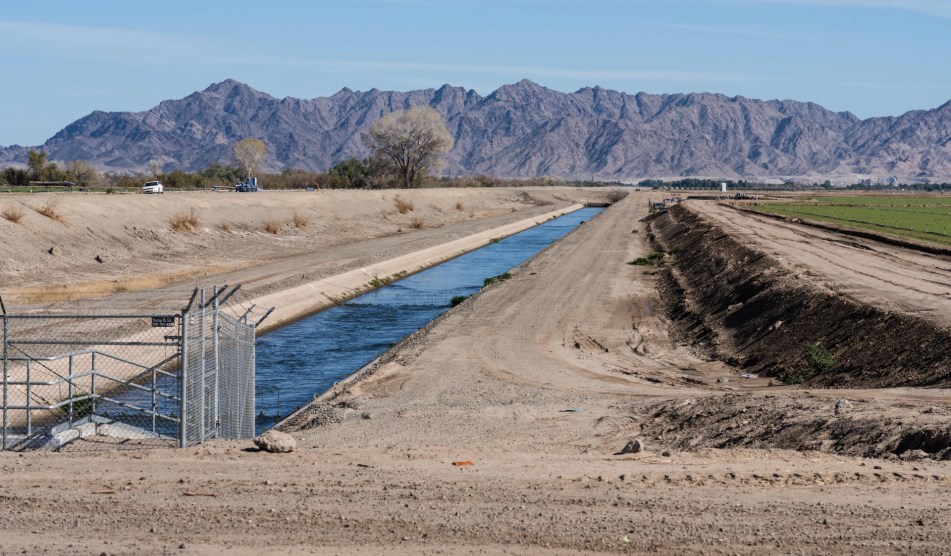
Regarding water, India has poor water infrastructure (again due to lethargic government response), which forces the people to deplete ground water.
So yes, When the government says that India's needs more economic development they are absolutely correct.
Actually India has more arable land per capita than many other countries that are not considered overpopulated such as China, Japan, Germany, UK.
Gorged itself on food, the US threatens the hungry
Julia,
It's America - the largest polluter - which is saying "screw the planet"; not India. Despite having the money, the technology and the product patents, the US has not agreed on implementing the Kyoto Protocol. Neither does the US openly desires to share the green technology with the developing world, like India, to leapfrog. The US hesitates to contribute in global climate change fund; hesitates to transfer green technologies and does not own up to is responsibility of the agreement it signs.
Who gets to heaven first?
Growing up in India, I remember this song we used to sing. It went something like this: if you get to heaven before me, keep the door open for me. If I get to heaven before you, "I'll close that door, and to hell with you!"
And that's what any discussion of what needs to be done on global warming invariably reminds me of. The West, having for decades plundered the earth, now, having achieved their prosperity, wants the East to "learn from our mistakes" and make choices that may be the best long-term approach, but cost a lot of money, far more than these economies can afford, given the other, more pressing issues they have to deal with.
The data on how much garbage the West generates, especially the US and Canada, compared to less developed economies is astounding. It's an order of magnitude difference. Yet ask any American (or Canadian) to take the train to work instead of driving in, alone, every day, 10 times a week, and see the uproar you'll get. Driving is an American right, so we say. Raise the price of gas and you might even get us to put down the remote control long enough to email our senators!
Yes, we've now recycle a lot of what we consume, but the (main) problem is the amount we consume. Consumption in countries like India is far lower and reusing things (as opposed to recycling) is a way of life for most.
~ Bernard
Negotiations for the UN
Negotiations for the UN Framework Convention on Climate Change (UNFCCC) summit in Copenhagen this December have often been fractious, with developed and major developing countries like India and China often taking opposing stands on who should do more to combat global warmin
We must links of london
We must links of london jewellery face the situation that abercrombie exists and take actions street light to solve our environmental problems. For instance, new laws must be passed to place strict control over industrial pollution, the pub!ic must receivet links london jewelry he education about the hazard of pollution and so on. ed hardy clothing We hope that all these measures will be effective and bring back a healthful environment.
Our government is aiming to build a 'harmonious society'. abercrombie & fitch I think it is every citizen’s duty to work hard to achieve th is goal.
As high school students, what should we do?
Post new comment
MoJo Comments: Send Us Your Feedback
We changed our spam software to better filter comments. Should you encounter any issues, please let us know.