Is Your Eco-Label Lying?

Sure, it says it's green. But what's that really mean?
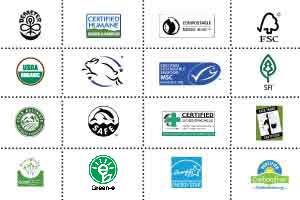
YOUR SHAMPOO BOTTLE is covered with labels proclaiming that its contents are all natural, cruelty free, and biodegradable, but is that actually true? There are more than 300 eco-labels out there, and not all are created equal. Official-looking seals created by industry groups can be misleading. Reassuring claims may be based solely on the manufacturer's word. And some feel-good terms are so broad as to be meaningless. Below, we peel back some common eco-labels and rate them: Green means clean, yellow is okay, and red means buyer beware.
Print 'n' Save: Download a printable PDF version of this guide here.
Advertisement
Advertisement
Sort by:
GREEN: Best of the bunch
YELLOW: Better than nothing
RED: Virtually meaningless
FOOD/ORGANICS
Biodynamic Demeter's standard for "beyond organic" biodynamic food and wine requires biodiversity and zero pesticides on farms.
100% Organic The real deal for produce and packaged food.
Certified Organic Confusingly uses the same logo as 100% Organic and applies only to packaged foods and wine. Contents can be no more than 5% nonorganic.
Food Alliance Requires farms to avoid GMO veggies or livestock, but they can still use pesticides.
"Made with organic ingredients" The label that gave us (thank God) organic Oreos. USDA requires products' total contents to be at least 70% organic.
"Natural" USDA-approved "natural" meat doesn't contain artificial flavoring, preservatives, or synthetic ingredients. But "natural" steak can still have antibiotics and hormones.
"No additives" Implies a product doesn't have ingredients like Red No. 40 or MSG. Or not—the maker decides what it means.
"Hormone free" Bull. Producers can call beef "hormone free" even if it contains hormones such as testosterone. By law, pork and poultry must be hormone free anyway.
ANIMAL CRUELTY
Certified Humane Raised & Handled Meat came from an animal that lived a happy (as far as we know) life with space to move around.
Leaping Bunny Cocreated by the Humane Society, this label is for cosmetics and cleaners without ingredients tested on animals.
"Cruelty free" No set standards.
"Free range" No set standards for beef, pork, or eggs. The USDA lets poultry producers make this claim if chickens have "access" to the outdoors for 51% of their lives, not if they actually go out.
BIODEGRADABILITY
Certified Biodegradable Soaps and cleaners with this third-party-certified label won't hurt fish and will break down quickly.
Compostable This label for eco-plastics adheres to stringent scientific guidelines.
"Biodegradable" Under FTC rules, biodegradable products must "return to nature" when left to the elements. No one enforces this overly broad standard.
FISH/SEAFOOD
Marine Stewardship Council For seafood that isn't endangered or overfished. The only real eco-label for fish.
Dolphin Safe Tuna Means dolphins aren't dying in tuna nets. But sea turtles, sharks, and other endangered species might be.
WOOD & PAPER
Forest Stewardship Council Created by enviros, loggers, and consumers, this independently certified label requires timber and paper companies to monitor their supply chain.
Sustainable Forestry Initiative Wood and paper come from forests where trees are replanted. Developed by a trade group, the label allows clearcutting and pesticides.
FLOWERS
VeriFlora For flowers grown with good labor practices, without heavy-duty chemicals, on farms that are going organic. Certified by one of the best third-party investigators.
Fair Trade Certified Flowers come from farms that pay good wages and help with health care and housing. Farms are encouraged but not required to avoid toxic chemicals.
FlorVerde A mixed bouquet. Created by a Colombian trade group, FlorVerde lets growers use toxic pesticides. It requires better hours, wages, and working conditions—but not as aggressively as Fair Trade does.
ENERGY
Energy Star Appliances and electronics with this EPA label are the most efficient.
Green-e Marketplace This badge identifies companies that get their electricity from renewable sources.
Carbonfree Doesn't mean a product is CO2 neutral, only that its maker bought offsets.
OTHER
"Hypoallergenic" Created by cosmetics advertisers in the 1950s, it has no set meaning or standards.
"Fragrance free" Means only that a product doesn't have a noticeable scent; it could still include chemicals that cover up odors.
"Nontoxic" Won't kill your kids if they ingest it, but might contain chemicals that can cause serious health problems.
"Earth smart"/"Green"/"Nature's friend" Meaningless.
Comments
Biodegradable or Compostable?
Interestingly, the Logo for compostable is from BPI..."Biodegradable Products Institute." No wonder there is so much confusion.
They should change the name of their organization to CPI...after all, they only certify for compost ability, not biodegradability.
Consumers need to start getting smarter, go to a product web site, and do your research.
Is Your Eco-Label Lying?
I believe most labels are lies which is why I make a lot of my own stuff. Sadly, the FDA does not make many chemicals reportable so manufacturers don't bother.
Animal Welfare Approved: the gold standard for animal welfare
I would like to bring your attention to Animal Welfare Approved, the high-welfare label that the World Society for the Protection of Animals calls "the most stringent" of all of the food labels regarding humane treatment of farm animals.
The Animal Welfare Approved program audits and certifies family farms that utilize high-welfare methods of farming. Farmers benefit from having a third-party affirmation of their practices and consumers benefit by knowing that the label means what it says.
What Does the AWA Seal Mean for You?
Animals are raised outdoors on pasture or range on true family farms with the “most stringent” welfare standards according to the World Society for the Protection of Animals in both 2008 and 2009 reports. The standards have been developed in collaboration with scientists, veterinarians, researchers and farmers and incorporate best practice and recent research. Annual audits by experts in the field cover birth to slaughter.
http://www.AnimalWelfareApproved.org
Visit the website for a searchable database of where you can find AWA products across the US.
Eco labels you can trust
Another excellent source of reliable information about eco-labels is ConsumerReports Greener Choices: http://greenerchoices.org/
You might add Rainforest Alliance Certified to your helpful list! Here's the ConsumerReports info about this popular seal: http://bit.ly/7TWwg6
Consumers can trust certification programs that are accredited by the International Social and Environmental Accreditation and Labelling Alliance www.isealalliance.org/ which was set up specifically to make sure ecolabels aren't "lying."
IMO none of these labels are
IMO none of these labels are lies, most if not all are commonly assumed to mean different things than they actually do and many take advantage of the consumer's ignorance in their marketing. The problem really lies in the consumer's lack of education. If you know what the label means (and understand what the terms mean) you will use them appropriately. Unfortunately sites like these who have a one issue focus contribute to the confusion. The Food Alliance is not just an "Eco" label. They work with farmers to create just and responsible management of their human resources (workers) and expand the impact of farming practices to include the surrounding air, water and soil qualities, a much bigger concern than mere exclusion of pesticides.
When using labels like these it is important to differentiate what they are in comparison to, as well as use whatever other information you have available (like scale of farm, directness of marketing/distribution etc.) I.E. "organic" vs. non-organic with no other information gives the advantage to "organic", at least you know that there were no artificial fertilizers or pesticides used and the product contains no GMO's which is becoming more and more likely with the unlabled product. But if the "organic" farm is large scale and mass distributed and the alternate choice is a The Food Alliance certified farm which is a small local farm reducing pesticide use to minimal levels necessary to compete financially as a part of their involvement with the alliance and they are improving worker conditions and establishing a managed wetland on their property to improve the ecological health of their region the choice is not so clear cut, esp. if you care about more than just how "Eco" friendly products are.
Hormone Free
Common sense will tell you that there is no meat that is "hormone free". We aren't hormone free and neither are animals. It is physiologically impossible to have life without hormones. Hormones are essential for the vast majority of all of our bodily processes. Yes, there are hormones that are approved to be administered exogenously in beef cattle. If we look at a 3 oz. serving of beef that has been administered hormones, it will have 1.9 nanograms (ng) of estrogen. (A nanogram is one billionth of a gram) A three oz serving of beef that has not received any of these hormones will have 1.3 ng of estrogen. A three ounce serving of potatoes has 225 ng. A three ounce serving of peas has 340 ng. If we were to try to match the amount of estrogen in one birth control pill, we would, in one day, have to eat over 3000 lbs of beef that had hormones adminsitered.
hormones in veggies
I was not aware of hormones present in potatoes and peas. Do you have a reference so I can read more? Thanks.
"cage free"?
Does anyone know if "cage free" means anything?
Cage-free questions
Dear confused-about-cage-free:
Take heart, it IS confusing.
Neither the Food and Drug Administration nor the US Department of Agriculture define “cage-free,” and that means there’s no legally binding term or oversight.
However, if your eggs are in a package marked with a USDA grade shield, they are subject to the following rules, according to an e-mail from Hakim Fobia of the agency’s Agricultural Marking Service:
“AMS defines “cage-free” as confinement of layer hens to a building, room, or enclosed area with continuous access to feed and water. The layer hens are free to roam within the confined area.”
He goes on:
“Egg producers that elect to use these marketing claims on labels identified with the USDA grade mark are subject to on-site verification of the production facility and procedures established to maintain the identity of the eggs. The identity of the eggs must be maintained from the source layer flock from the time of production through transport, storage, processing, and packaging. The USDA grader at the egg processing facility assures that only eggs originating from such flocks are eligible for identification with the appropriate marketing claim. Furthermore, AMS maintains the authority to require the recall from commerce of any shell eggs identified with the USDA grade shield that are mislabeled.”
Bottom line, eggs that don’t have the USDA shield might say “cage-free” but it might not mean much.
For information about the rules on organic eggs go to www.organicconsumers.org
For more information on this, there’s this from Consumer Reports:
www.consumerreports.org/...cage-free/grocery-aisle-gotchas-whole-grains.htm
Good luck,
Rebecca Clarren
cage free eggs
Thanks, Rebecca, for the hint about USDA shield on egg carton. I hadn't know to look for it. (BTW, the link to Consumer Reports doesn't work). I remember reading somewhere that "cage free" might not mean much sometimes; could be just a concrete floor, worst case. Problem is, seems to me, that the FDA is probably under-funded and has far too few inspectors to ensure compliance. Though Obama may be trying to improve it after the horrors of Bush, he's mostly sizzle and not much steak so far.
MOJO needs better research.
MOJO Editors:
What criteria did you use to determine this rating? You did well to recognize independent, third-party verified labels, but without telling your readers HOW you've rated these labels you've only added confusion to the nuanced world of ecolabels.
More than any other ecolabel, Food Alliance Certified addresses a broad range of issues related to food production and processing.
Food Alliance standards include:
1. Ensure healthy, humane animal treatment
2. Support safe and fair working conditions
3. Protect and enhance soil resources
4. Protect and conserve water resources
5. Protect and enhance biodiversity
6. Conserve energy, reduce and recycle waste
7. Reduce use of pesticides, and other toxic and hazardous materials
8. Maintain transparent and sustainable “chain of custody”
9. Guarantee product integrity, no genetically engineered or artificial ingredients
10. Continually improve practices
On the issue of pesticides:
All farmers face threats to crops and animals from pests and disease. Food Alliance Certified standards emphasize farm management practices that help prevent the occurrence of pests and disease in the first place. As examples, farmers use integrated pest management, rotate crops to prevent the build up of pest populations, or plant rows further apart to allow better air circulation to avoid problems with mildew. Food Alliance Certified recognizes that if farmers and ranchers manage the land and agricultural cycles appropriately, they can reduce or even eliminate reliance on routine pest treatments.
I hope you and readers will learn more about what makes Food Alliance Certified the most comprehensive and credible ecolabel for sustainable food in North America.
Dear Food Alliance: Thank you
Dear Food Alliance:
Thank you so much for your detailed response. The Food Alliance label is, as you say, a great effort to get farmers and consumers thinking beyond organic and towards a bigger picture of a sustainable ecosystem, labor force and local economy. However, according to research by the Hartman Group, a market-research firm and consulting firm (http://www.hartman-group.com/hartbeat/the-green-bottom-line-this-time-it...), consumers continue to be most preoccupied with issues of personal and family health and wellness. The fact that pesticides are allowed, even in potentially small dosages in the cultivation of your products is why we gave you a yellow label.
I’m glad you’ve listed your website and contact information and I hope interested consumers will learn more about you directly from the source.
All best,
Rebecca
analysis is misleading
I'm curious about the source of information for the item re: wood and paper eco-labels.
The Sustainable Forestry Initiative and Forest Stewardship Council programs are both independent third-party certification programs that monitor supply chains and replant trees. The FSC program also allows clearcutting and pesticide use – why not add that in FSC’s description? The truth is both standards manage these aspects of forestry by ensuring appropriate requirements are in place for wildlife habitat, water quality, and in the case of pesticides minimizing their use, and using narrowest spectrum pesticides and alternative methods such as integrated pest management, but at the end of the day, pests, insects and disease can do great damage to forests and their ecosystems, and therefore it makes environmental sense to control them in the most environmentally responsible manner possible.
I certainly appreciate the intent of the article – given that greenwashing is a real problem – but I think your summary of SFI is off the mark. In fact, in its Seven Sins of Greenwashing (http://sinsofgreenwashing.org/), TerraChoice recognized SFI and FSC on-product labels among 14 credible eco-labels because that meet its criteria -- third-party certified, publicly available standard, and transparent standard development process. Neither of these independently audited standards are examples of greenwash – in the world of eco-labelling, SFI and FSC are leaders. Currently just 10% of the world’s forests are certified at all - espousing controversy by pitting one 3rd party system against another is counterproductive.
Like Mother Jones, SFI Inc. is a 501(c)(3) non-profit charitable organization, so I know you can appreciate this means we are not organized or operated for the benefit of any private interests. Our board represents conservation/environmental, social and economic sectors equally. And while the original SFI guidelines were developed under the auspices of the forest industry, that was close to 20 years ago - the program and the Standards have evolved. In fact, next month we launch the third standard developed through an open public review process. You can learn more at sfiprogram.org
A more accurate accounting of the SFI program in your listing (with a green rating) would be: "Independent certified label shows wood and paper are from legal, responsible sources. Forests are replanted and sustainable practices promoted on all suppliers’ lands in North America."
If you are interested in learning more about the SFI program check out www.sfiprogram.org or goodforforests.com
Dear SFI: Obviously with such
Dear SFI:
Obviously with such limited space, I couldn’t go into serious depth. However,
I stand behind labeling FSC “green,” and SFI “yellow.”
FSC has stricter and more prescriptive forest management standards. Their label has more transparency for consumers, and their standard is more based on overall forest health.
Readers with additional questions/interest might look at an April 2009 report by the Sierra Club, “Choosing a Forest Certification System.”
http://www.sierraclub.org/committees/forestcertification/
The report notes that, “Although the FSC is far from perfect, it is still the most credible and effective forest certification program in existence.”
Also helpful is a 2003 study by the Yale School of Forestry: environment.yale.edu/files/biblio/YaleFES-00000138.pdf.
The paper refers to SFI as “more flexible” and “industry-initiated,” and FSC as “more prescriptive environmental-group-supported.”
And this from the World Wildlife Fund, which states that FSC is the best system:
http://www.panda.org/what_we_do/how_we_work/conservation/forests/news/?1...
All best,
Rebecca Clarren
overlooked
There are an awful lot of comments about the lack of information and confusion and about how this article is contributing to the confusion of eco-labels.
Yet, I feel that just raising the issue is a huge step. I do not think that this article will confuse people, but I definitely believe that it will open people's eyes to the truth, don't just trust a label, find out what it really stands for.
Society in general has allowed itself to be duped by large companies, we have become to trusting, I think articles like this one can call on us to be more discerning.
Organic?
Take walk through your local Whole Foods where everything is "supposed" to be organic. But is it really? Because they say so?
I doubt if half of their products are 100% organic.
Whole Foods has an extensive
Whole Foods has an extensive testing program to make sure their produce is organic if it is supposed to be organic. Testing for pesticides is not required to be certified as organic. Organic growers still spray pesticides, they are just OMRI approved.
Confusing or Concise?
Thanks for all the comments. This guide is meant as a concise, compact list that you might stick on your fridge or take with you to the grocery store. Obviously, we couldn't cram comprehensive reviews of each eco-label into such a small space. As Diane J notes above, there's a lot more detailed information about eco-labels out there (see Consumer Reports's Greener Choices site).
But just because these reviews are brief, it doesn't mean they're not based on solid research or a consistent standard. (If there's something inaccurate here, let me know.) We gave "yellow" ratings to eco-labels that had many positive features but had one or more significant features that might concern or surprise consumers, such as allowing pesticides. That's one reason why we made Food Alliance, Sustainable Forest Initiative, and FlorVerde yellow. The yellow rating doesn't mean "keep away"—more like "heads up." I understand why Farm Alliance and SFI aren't happy with that decision, but I'm glad that they've weighed in here to make their cases and provide more information about their standards.
This guide is not trying to trash eco-labels that are seeking to do the right thing. Instead, it's meant to show that eco-labels by themselves often don't say very much. Unless you're familiar with all of an eco-label's ins and outs, it's nearly impossible to guess what it really represents when you come across it. Hopefully, after consulting this guide (and the comments), readers will have a better sense of which eco-labels are purely feel-good and which ones really stand for something.
Dave Gilson
Senior editor, Mother Jones
Farmers' markets
This has been a fantastically helpful thread. I learned a lot. Partial fallout from the thread: I resolve to patronize the FOUR farmers' markets that we have in our small city, plus others in adjacent cities. We also have a large and flourishing co-op market. So there's no more excuse for just picking up one or two onions or one green pepper (I cook for just moi) out of convenience. I will try to make a list and shop where one doesn't have to worry about labels. Exception:
I still buy Trader Joe's frozen foods because I think (I hope) they are relatively free of bad stuff. Opinions?
I am researching the Shampoo/Conditioner category. It is in the teaser, asking the question, but where is the shampoo and conditioner market in your results? I would LOVE to find out more abut this. It is a huge trend in out industry now, with little or no testing standards that I can find. Any links to data that is current?
Post new comment
MoJo Comments: Send Us Your Feedback
We changed our spam software to better filter comments. Should you encounter any issues, please let us know.