Counterparty Risk

| Sat Mar. 7, 2009 4:30 PM PST
What's going on with AIG?  Just in the past few days the entire country has suddenly become outraged by the fact that much of the federal bailout money going to AIG is being used to pay off its creditors. Creditors, in this case, being people who bought insurance via credit default swaps and are now owed payment either for mortgage-backed securities that have gone bad or for increased collateral requirements caused by AIG's downgrade from AAA.  And some of these creditors are other banks!  And some of them are even foreign banks!!!
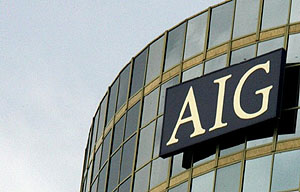
But look.  Last year "counterparty risk" was practically crowned the phrase of the year.  You couldn't swing a dead copy of the Wall Street Journal without coming across it.  It's the reason we're bailing out all these guys in the first place: if a big bank goes bust and stiffs all its creditors, then there's a chance that they'll go bust too, and before long you have a cascading series of failures that's brought down the entire world.  We tried letting Lehman Brothers — a relatively small bank in the grand scheme of things — go under, and all hell broke loose.  That's why the Fed stepped in a few days later to save AIG.

So why is everyone suddenly acting as if we just discovered yesterday that bailout money is being used to pay off AIG's counterparties?  And that this is some kind of scandal?  Help me out here.  I'm genuinely confused about why, after six months, this has suddenly become the populist outrage du jour.
Advertisement

Advertisement

Kevin Drum is a political blogger for Mother Jones. For more of his stories, click here.

Get Mother Jones by Email - Free. Like what you're reading? Get the best of MoJo three times a week.

Comments

Counter Counter

tagged as: 
You thought everybody was following this as closely as you do? Paying off depositors is one thing, but spending something like $700 per capita to bail out Goldman Sachs and Eastern Europe is another.

$$$$

Kevin, It's because we're no longer just reading stories about counterparty risk, we're reading stories about spending $30 billion a quarter to pay for it.

New Circumstances

Kevin - The reason this is an "outrage du jour" is for a combination of three reasons: 1. We keep throwing money at AIG, so it's still in the news. 2. People are increasingly tired of throwing money at people who are perceived to have caused the problem, especially when those people are cloaked in mystery. 3. We have a new administration, and things are supposed to be better, especially in the area of transparency and sound policy. In short, people are more tired, more worried, and yet have higher expectations.

I think some of the noise is

I think some of the noise is about the fact that it's a secret where the bailout money is going. Which seems fair; we should be able to see where all those billions are going.

Let's have about a counter counterparty party!

Kevin, your guess is as good as mine, but I think it has something to do with the fact that it's a whole lot easier to rally a bunch of populist outrage than it is to have a lucid discussion of complex issues, especially when none of the available options are pleasant.

Where's the money?

Here is something I don’t understand about the AIG thing: Where is all the money? The key fact is that, as best as I can tell, there don’t seem to be a huge number of cases in which people are defaulting on the obligations that were supposedly being insured. Bear in mind that we're not talking about homeowners or even lots of homeowners defaulting----what's being "insured" in the CDS transactions is counterparties not paying or CDO/bond type stuff not paying. Apparently most of those things are still paying despite the problems in the housing area. The whole subprime mess probably does not equal the amount which we put into AIG, which leaves two possibilities worth exploring: 1. AIG simply booked hundreds of billions of dollars in bets about whether or not it would ever lose it’s AAA rating. They weren’t really insuring anything, just taking bets on whether they would lose their AAA rating during a specified period of time. So now, having lost its AAA rating, it has to pay off the bettors and this is true even though the underlying debts are, by and large, still paying. If this is so, then the payout would seem to be pure profit to the bettors----AIG pays them plus the original debtors still are presumably, paying them. In which case, they just won the lottery and all of these “counterparties” should be reporting gigantic profits. But none of the known AIG “counterparties” is reporting such profits. To the contrary, most of them seem to be in need of rescue themselves. So, where’s the money? 2. Losing its AAA rating is an event of default that forces AIG to put up ever more collateral and this is causing its “death spiral”. Again, if my belief that there has not been hundreds of billions in actual defaults (by which I mean people have stopped paying on their loans) is correct then AIG should still have all or most of the money the federal government used to bail it out. Also, the government should be able to stop this run nationalizing the remaining 20% of AIG it doesn’t yet own and declaring that AIG’s debts are now “full faith and credit” (since we appear to have informally agreed that to be the case, and since a formal guarantee would restore AIG’s AAA rating and eliminate both the defaults at no real additional cost to taxpayers). But we haven’t done that. Why not? Finally, if AIG is simply using this money as “collateral” then it shouldn’t actually be paying the counterparties and most of the bailout money should still be in AIG’s hands. I don’t understand any of this. Which banks or institutions are defaulting? How many bonds have stopped paying? Where’s the money? Mitch Guthman

I'd like to know we aren't

I'd like to know we aren't paying twice for the same crap. If we're paying off AIG's "insurance" policies, why are we at the same time dumping money into the banks? It's similar to a question I never heard answered regarding PMI. If people had to pay PMI, why hasn't PMI paid off their bad mortgages? There's also upset over seeing the bad guys being rewarded even now. Countrywide's execs are now buying up bad mortgages for pennies and bragging about it. If I lost my employer $100, I could be fired. If I lost $10,000 they might even file a civil suit or look after criminal penalties. The assholes at AIG lost billions for their shareholders by not having the proper assets to back up their policies and yet no one is going after them on criminal charges of violating their fiduciary responsibilities to the shareholders. No one is going after the credit rating agencies for their incompetence. Not civilly, not criminally. People aren't outraged enough.

I've asked myself the exact same question...

We criticize the banks for taking unreasonable risks, but here they were hedging their risk in a plausible way: credit default insurance underwritten by a AAA-rated company. If AIG reneged on their obligations to pay-off credit defaults... would that be legal even? And could AIG continue as a going concern if they proved to be faithless? It seems to me that this is a big brouhaha over nothing. (You should called out Josh Marshall. You're too nice, Kevin.)

And Then....

to further confuse my view of this issue are margin calls. As think I know….as one of the insured (CDS) assets loses value, AIG is required to increase its margin amount or it is in default in its side bet on an asset that still hasn’t actually defaulted itself. Am I wrong? My head hurts. Someone, help!

Wagster, Surely you are

Wagster, Surely you are joking. You don't know that we the taxpayers have already paid out $600 for every man woman and child in the US to cover AIG's bad bets? That money went to pay off mostly European banks and Goldman Sachs to cover the bad bets they had made. As a result GS and Eastern Europe are still afloat. You and Kevin are the clueless pair here, not Josh Marshall. Josh just noticed that Americans are impoverishing themselves to keep some people rich. He wondered who those people were and why we, the payers, aren't allowed to know.

Outrage

If you are an American taxpayer, you have already been stuck for $600 per family member to pay off AIG's bad bets, with the near certainty that it will rise to nearly $1000 per person. Our government refuses to tell us to know to whom that money is going. If you aren't outraged, you probably haven't been paying attention. Josh Marshall is right to wonder, and so are those who found that the money goes to Goldman Sachs and European banks. In other words, a lot of very rich people made some very bad bets, and we are covering them. Kevin, Wagster, and others among the clueless - WTF don't you get?

It's cuz 90% of Americans

It's cuz 90% of Americans (and foreigners too, I'm not picking on Americans) are dog-shit stupid. But hey, turn up the heat on the fiasco artists. What's the harm?

CIP, we've passed that

CIP, we've passed that point, and the counter-parties are beginning to be identified. I think Kevin's question is, now that we know that the counter-parties are large banks- why the surprise and outrage specifically at that? To whom else would AIG be paying their CDS obligations? It's not the same as being unaware of the horrible financial position companies like AIG has put us in.

AIG

I think because, when you see what's going on here, it begins to look like the fairer thing from a taxpayer perspective is to let AIG go down and then just finance the banks directly. At least that way the taxpayers get equity in the banks in exchange for their money.

The public is the backstop for bad insurance?

Which strikes me as a serious case of socializing the downside for some super high rollers. Basically AIG sold bond insurance for far below it's proper (with hindsight) cost. Maybe the banks that bought the insurance knew they were getting a great deal -maybe they shared the same illusions. In any case even Paul Krugman thinks AIGs counterparties should also bear a portion of the loss share in the haircut. The way we are doing this thing now, we are simply shovelling ever greater amounts of money into a supermassive blackhole. Physicists will tell you that feeding a blackhole only makes it bigger.

Just a guess

I'd venture a guess and say it's a reaction to the fact that AIG seems to be a bottomless pit that swallows roughly $30 billion every second month or so. The initial acceptance that this 'has to be done for systemic reasons' has given way to the questions:"'How much more is this going to be?" and "Where is all this money going?". Isn't it understandable that people start to view the AIG situation as the taxpayer slowly being bled dry? With lots of the bllod money going to banks, some of which are zombies that are seemingly being fed gazillions of dollars through any orifice of their lifeless bodies anyway? Maybe what Kevin calls the 'outrage du jour' is the distant sound of the pitchfork brigades stirring.

Outrage

Glenstein, I think the problem is that they are foreign banks. Giving money away is bad enough, but to French and Swiss banks - including a Swiss bank that just pled guilty to defrauding the United States of taxes.

scandal explained

For a good explanation of the reason for calling this a scandal, read: http://theautomaticearth.blogspot.com/2009/03/march-7-2009-political-soc...

populism meets nationalism

Populism and nationalism are a dangerous mixture. I think the key issues is that many of the counterparties are European. Why should the *US* Treasury bail out European banks because AIG's *London* office did stupid things ? More generally, Europe has not been pulling its weight. They are clinging to policies which were required to get Germans to part with the Deutchmark -- a central bank which is allowed to consider only price stability and only allowed to stimulate if there is a risk of deflation (recession fine deflation not price stability) and the " growth and stability pact. Personally I think a bit of xenophobic populist outrage about the AIG bailout might make the world a better place by putting a bit of fear of US Yahoo's into them. A second issue is that some beneficiaries of the bailout aren't being humble enough. In particular Goldman Sachs is very smug. They don't need TARP money, they do need the AIG bailout. It was decided by their former CEO after consultation with their current CEO. A lot of people are irritated that investment bankers haven't been humbled enough. It is irresistably tempting to stress the fact that Goldman Sachs is living off the public teat too.

No roadmap

It's simple why people are suddenly so upset, Obama hasn't presented any kind of vision that describes how we are going to fix the financial mess. I'm all for bailouts that keep the financial system functioning, but I'm getting frustrated as well. Where the hell does it end? And I don't understand why we still haven't spun off the AIG unit that wrote these stupid contracts from the healthy AIG insurance ops. Seems to me that should be the first step, that way you get an instant "bad bank".

yes, it's because, when

yes, it's because, when asked, the banks refused to tell what they were doing with the money.

secrecy etc.

First, it is the weak approach to a massive and dangerous problem. Second it's Geithner's weasely avoidance of disclosing the counter parties. Sorry, but it is now way past the point of trust. I want to know where the money is going. Third, the obvious protection of share holders. Screw 'em. We should have nationalized AIG. Nationalize any of the counter parties that are dependent on AIG meeting its obligations because these companies were stupid and deserve to fail. Any company that is surviving on the payment of swaps is defacto insolvent. Fourth, anyone who took out a swap on something they did not own were making a bet at the dog track and deserve to lose. The American tax payer owes them nothing. Fifth: it is not clear that there is an end in sight for the debacle. AIG is a joke and the big banks are probably insolvent. It seems that Geithner and Summers are the wrong guys. They are too close to Wall St. If Obama is betting the ranch on them he is making a huge mistake.

Some responses

Josh Marshall is right to wonder, and so are those who found that the money goes to Goldman Sachs and European banks. In other words, a lot of very rich people made some very bad bets, and we are covering them. Josh can wonder. The reason they didn't want to reveal this is because it would be politically damaging. There. No big mystery. But just because you're the government doesn't mean you can buy a company and disregard it's contractual obligations. The U.S. had a choice: it could let AIG go under and replay the Lehman Bros crisis... squared this time... or it could take over AIG and make good its commitments. You can't pick and choose which contracts you're going to honor and which you'll ignore. It's ugly and unfair that we're in this situation, but there it is. I think because, when you see what's going on here, it begins to look like the fairer thing from a taxpayer perspective is to let AIG go down and then just finance the banks directly. At least that way the taxpayers get equity in the banks in exchange for their money. Maybe, but it would have risked a panic. Also, at that time the government didn't really know what it was getting itself into. Finally, there's a lot of value in AIG still. The losses are all in a tiny corner of the business... the rest of the company is pretty healthy and when the economy recovers, they will sell off the healthy parts and recoup some of the investment. Third, the obvious protection of share holders. Screw 'em. We should have nationalized AIG. We did.

Two kinds of CDSs

It's important to realize that there are two categories of credit default swaps. 1. CDSs that are genuine insurance on bonds that someone holds. 2. CDSs that are simply casino bets on the default of someone else's bonds. This is like buying fire insurance on your neighbor's house so you can profit on their misfortune. In the first case there are real assets at risk. In the second case there is nothing at risk except the price of of a premium. It may make sense to pay off the first but not the second.

CIP, thanks for the

CIP, thanks for the response. But that doesn't change anything. AIG is playing in an international market, and, still, these payments are for CDS obligations AIG entered into with foreign banks, same as with U.S. banks. Are we saying that american financial companies should be barred from doing CDS's with foreign financial entities? If so, it's the first time I've heard that, and it doesn't seem any more applicable here than it would be against globalism in general, or against some very fundamental assumptions about how CDS's work, assumptions that have been in play for years before the financial crisis struck and in any case are totally independent of the counterparties disclosure. I think all of this "outrage" in reaction to learning who AIG paid, might be better explained like this: It's not that the disclosure of counter-parties actually revealed anything new or shocking to us (and it's not going to do any good to try and argue that your outrage is in response to some specific detail related to counter-parties), its that at each new level of disclosure, the whole scene of total irresponsibility becomes that much more complete and vivid and justly inflames the initial outrages we've been expressing since the beginning, against the devastation wrought by the incompetence of the sector as a whole.

Kevin, you exercise a fair

Kevin, you exercise a fair amount of common sense and skepticism when examining social issues and issues of foreign policy, but you are so accepting and unquestioning of bank bailouts because the establishment claims they are doing it to avoid a financial meltdown. Look, the banks who bought insurance from AIG are supposed to be sophisticated individuals who understood and assessed risk. These are large commercial/financial operations that have highly paid people whose sole business is to understand how to assess risk. If they chose to go with AIG it is their effing fault for taking that risk. Please don't tell me they were somehow misled by someone else. I have been reading skeptical commentary about derivatives where the question "Are the insurers underwriting these derivatives large enough to payout in case they have to?" was asked and answered with "Hell, no!" I was reading this kind of skepticism (at www.contraryinvestor.com for example) years before this blowup. Warren Buffet warned about derivatives, based on first hand experience, about the danger of derivatives as early as 2003. If Goldman Sachs, the European banks etc went ahead and bought insurance from AIG in spite of all these warnings, those bastards deserve not to be paid. Why the eff should I be paying for the greed of those idiots? Please don't tell me the financial system will melt down without forced charity from the tax payer. That argument sounds like Bush's "we have to fight the terrorists on our homeland if we don't fight them in Iraq" argument. It is based on pure fear. The fact that Goldman ceo was involved in the bailout of AIG, along with Paulson (ex Goldie), should raise a big red flag. These bastards are robbing us blind and you are asking us to bend over and lubricate carefully lest the molesters feel any pain screwing us. Why can't these swindlers, and that includes Bernanke and Geithner, tell the taxpayers what they are doing with taxpayer money? We are talking hundreds of billions of dollars damn in, not a few millions. And why should the US taxpayer be bailing out european counter parties? Why can't the Europeans take care of that? We are effing screwed. They are stealing tens of billions of our dollars and no one cares. Obama promised change and he is helping the banks screw us. Why can't he tell us who is receiving these monies? Why can't they simply use that money to help save jobs? Or create new ones? People with jobs will spend and help the economy rebound. The bankers who knowingly took wild risks can go screw each other -- with or without petroleum jelly depending on their tolerance for pain.

No, we didn't nationalize AIG

Nope. We got 80% of AIG in the first go 'round. We diluted shareholders without altering the fundamental ownership structure. It is still traded. Go buy some at $.35 a share. The government is still pouring money in and I have not seen any news indicating that we now own the entire shitpile. I have wondered if we had nationalized AIG would it have altered how the CDS mess unraveled, given how ratings and securitization work. Could a prompt nationalization have halted some of the domino-ing, I dunno. At any rate, the taxpayer deserves all the good bits of the company for a few years.

Bailer-outer of last resort

I agree that the issue is overseas counterparties. If the AIG money was just wending its way through the US banking system and economy, people wouldn't be so outraged. But international economics is still perceived as being a zero sum game (and sometimes it actually is).

@ rational: >Please don't

@ rational: >Please don't tell me the financial system will melt down without forced charity from the tax payer. That argument sounds like Bush's "we have to fight the terrorists on our homeland if we don't fight them in Iraq" argument. It is based on pure fear. It's based on the opinion of more than a few economists (link), and weighing that against your not-particularly-detailed analogy to Bush admin fear mongering, I'll prefer the opinions of economists. Commenters advising Kevin that he is "obviously" wrong are mixing up his question about counter-parties with some unrelated question about whether he thinks the financial crisis is good or bad. Honestly, who did you expect would be the counterparties to CDS's, besides banks? More to the point, who could have turned up on that list, that could be reasonably be expected to be on that least, that would not have lead to "outrage"?

Since we are propping up some giant foreign banks through AIG

Maybe we could split the cost with some other governments?

glenstein: Your link

glenstein: Your link (http://mediamatters.org/items/200903060025) refers to economists arguing that the stimulus bill should be larger. I have no opinion on that. My response to Kevin was specifically about the bank bailouts. Everything about bank bailouts from day one was suspicious. Bankers (including the Federal reserve, which, you may or may not be aware, is largely made up of private banks with many of the officers of the bailout recipients sitting on the boards of these banks) and the treasury secretary had several closed door meetings and decided to persuade Congress to give them a 700 billion dollar bailout. They talked up big numbers and scared the shit out of members of congress. That was the same tactic used by Bush to scare members of congress -- including many Democrats -- into supporting an invasion of Iraq. Bush found several prime ministers, presidents, generals, and senators to support his views on Iraq. That doesn't mean it was the right thing to do. The Iraq invasion and the fear whipped up to drive the population into supporting it didn't pass the smell test. Many of us saw right through that even before the Iraq war was launched. You can easily find some economists who will tell us that bank bailouts are needed. That doesn't mean the bailouts pass the smell test. Most economists weren't warning us about the looking problems in the financial system, so their support for bank bailouts doesn't mean much. Bailing out banks is not about economics -- it is about giving money to people who made wrong bets when they should have known better. If I buy a stock at $50 and wake up the next morning to discover that the stock is trading at 10 cents because it declared bankruptcy overnight, no one is bailing me out for that disaster. Why should rich bankers and their shareholders be any different? These smart cookies have played their cards well and managed to whip up a Fear or financial collapse. Think about it. Someday, when it is too late, we will find out more details of how they pulled this off. It will be too late to do anything at that time. I can't believe we are such gullible idiots to sign off on tens of billions of dollars of giveaways to banks because they told us the alternative is utter chaos. It is so easy to deceive the public. No wonder we have con artists stealing hundreds of billions of dollars using any means they can employ. All they have to do is scare us a little bit and we yield.

List of i-banks who got AIG cash

Barry Ritholtz posted a list of counter parties at his blog: http://www.ritholtz.com/blog/2009/03/ibanks-grabbed-50-billion-in-aig-ba...

first, the Media Matters

first, the Media Matters link. The point that should be taken from that is that the economists believe there is a two trillion dollar "gap in demand", and just as the stimulus bill is intended to move the economy toward recovery, so too is the bailing out of the financial institutions. The "gap in demand" is another way of saying economic collapse- which the same economics believe we will be facing absent an injection of capital into the economy. This was admittedly by no means clear from my previous comment. In any case, looking at your comment, it looks like you don't dispute that there exist economists who take the position that a bailout is necessary. As for the substance of your doubt.... >You can easily find some economists who will tell us that bank bailouts are needed. This is weak- you've done nothing to differentiate such economists from those expressing legitimate concern. The extention of your analogy does nothing to fill the space where a legitimate argument on the economics of it ought to be. So again, your argument (or absence of one), gives way to the predominant opinion of the experts who do supply such arguments. This is trailing off topic both from Kevin's post and my comments in agreement with his post.

You are free to succumb to irrational fear

@glenstein: It's obvious we are in a bad shape. You have somehow convinced yourself that giving money to big banks will solve our problems. Having watched the way the bankers, with help from an ex-banker Paulson and the Federal Reserve (a collection of the same banks that got bailed out directly and indirectly), got themselves a bailout from the US tax payer, I'm not convinced that giving money to reckless speculators will help solve the problem. If the goal is to improve the economy the best way to accomplish that is to create jobs. Consumer Confidence is directly impacted by availability of jobs. A confident consumer will spend, borrowing if necessary. This article (http://www.contraryinvestor.com/subscriber/mo030309.htm) which is at a subscription site (about $30 per quarter) shows several charts based on recent Conference Board consumer survey to make that point. I urge you to read that article (your subscription will be well worth the money if you are interested in macroeconomic analysis and analysis of markets. As I mentioned above, this site did a great job of pointing out the excesses of the Credit Bubble and of derivatives during the last several years. All one had to do was to read this site two times a week to understand the severity of the bubble. BTW, you have said nothing about reasons why the US tax payer should give money to banks that should have known better. Why did they not pay attention to risk when they should have? So here is my simple observation: the economy is in a poor shape but giving money to reckless speculators isn't going to make it any better. That money should be spent to create jobs, if the goal is to nurse the economy to a recovery.

I'm genuinely confused about

I'm genuinely confused about why, after six months, this has suddenly become the populist outrage du jour.
Cause most of us know that if we lose our jobs, the best we can expect is $300 a week in unemployment compensation, the opportunity to pay $500 or more a month to get COBRA Health Insurance and creditors knocking on the door in a few months.

And we get all this good stuff while watching our 401Ks become 201Ks.

This is scandalous because

This is scandalous because the $700B was supposed to rescue us from further serious risk of collapse. Also because the country as a whole has clearly indicated that it is not in favor of bailing out these institutions - polls show a majority in favor of nationalization - but the Obama administration seems to be just continuing the policies of the Bush administration in these matters. Is that what Obama was elected to do? I didn't agree to the bailout in the first place - why should I be satisfied now? When a course of action is ineffective, why should it be continued?

link from Left Right, & Center podcast

Here's an interesting idea to get some of the money back from the banksters... http://www.thedailybeast.com/blogs-and-stories/2009-03-06/how-to-shake-d...

Disagree

I disagree that MOST of the outrage is because many of the banks are foreign. Some of it, for sure, you can see that in comments on any number of blogs. But far more people are just outraged that this shenanigan is being allowed to continue at all. The sense I get is that what is pissing people off is all these Masters of Universe still have their jobs, their plush Park Avenue homes and wealth covertly hidden off-shore. I think most people are ok with making the legitimate people whole - pension funds, etc.... But the fact that Wall St financial geniuses are still pulling down huge salaries and bonuses after having destroyed the country is a problem that somebody needs to address soon or you're going to see a revolution happen. Nobody has been fired, nobody other than a couple of Ponzi wizards is headed to jail, so far. The message being sent out to the hoi polloi taxpayer is that it's ok to commit fraud on a massive scale if you're too big to fail and make the right donations. The longer the fraudsters are still collecting huge paychecks courtesy of the taxpayer, the worse the outrage is going to get. AND THEN, we get a response from the Obama Administration that reinstating Glass-Stegall is maybe going a bit too far. JoeSixPack is starting to get a strong whiff that the Obama people are dancing to the tune of Wall Street just like the previous 3 administrations.....

Who's Getting the Money?

It looks like the counterparties are pretty much known. This is the list from last year's AIG bailout. It looks to be heavy on foreign banks. Is this just the US way of helping out its pals across the pond for a problem that was thought up here and then exported abroad? I sometimes get the hunch that this was the point from the beginning. Bundle up these risky securities and then sell them abroad or to other unwitting buyers. Unfortunately the game ended too soon and US banks got stuck holding a lot of the risky assets. But that doesn't explain why AIG would have been dumb enough to insure them. Apologies for my conspiracy meanderings. I just really can't understand how most of the big investment banks in the US could have been so immensely stupid. It makes no sense. From AP: "Citing a confidential document and people familiar with the matter, The Wall Street Journal said recipients of AIG money include Goldman Sachs Group Inc. and Germany's Deutsche Bank AG, each of which received roughly $6 billion in payments between mid-September and December 2008. Also receiving AIG money last year were Merrill Lynch, now part of Bank of America Corp., French bank Societe Generale SA and, to a lessor extent, Morgan Stanley, Royal Bank of Scotland Group PLC and HSBC Holdings PLC, the newspaper said. Meanwhile, business magazine Fortune on Saturday issued its own list of 15 banks that received AIG money, including: Calyon, Credit Agricole of France; UBS; Barclays; Coral Purchasing, DZ Bank of Germany; Bank of Montreal; Rabobank of the Netherlands. Fortune, which credited a "reliable source," did not supply dollar amounts that each bank received."

AND THEN, we get a response from the Obama Administration....

Art Eclectic, Did someone in the Obama administration really say that reinstating Glass-Steagall was going too far?!! I hadn't heard that. Anyway, I think you're right on target with the reason for public anger towards the bailout. The moral hazard in this whole situation is huge. A very long sentence from Roubini: " ... these Bush hypocrites who spewed for years the glory of unfettered wild west laissez faire jungle capitalism (and never believed in any sensible and appropriate regulation and supervision of financial markets) allowed the biggest debt bubble ever to fester without any control, have caused the biggest financial crisis since the Great Depression and are now forced to perform the biggest government intervention and nationalizations in the recent history of humanity, ALL FOR THE BENEFIT OF THE RICH AND THE WELL CONNECTED. " (My caps)

Nepeta

I'm trying to find the quote again, I seem to think it was on TPM. I also think it was Larry Summers (quell surprise.) His answer when asked about reinstating Glass-Steagall was something along the lines of "we're ok with what we've got now." The mind boggles.

et tu Larry?

Art Eclectic wrote:
... it was Larry Summers (quell surprise.) His answer when asked about reinstating Glass-Steagall was something along the lines of "we're ok with what we've got now." The mind boggles.
Just because your tiny mind boggles doesn't mean he's wrong. On economics issues I'll listen to him all day before agreeing with your opinion.

MarkH - tossing around

MarkH - tossing around insults instead of offering anything resembling a point-counterpoint refute of my opinion only makes you look like a tool. Explain why we don't need the regulation (spearheaded by Summers and friends in the first place, natch) that would have kept a lid on the damage from this economic collapse? You can't regulate out human greed, but you can at least limit the damage to the system from it.

Kevin Drum's Oversimplification of CDS

I suspect that Joe Nocera's article in the NYT was the catalyst for much of the outrage at AIG but beyond that there really is a need for transparency. Current and probably future generations of US taxpayers are going to be on the hook for these bailouts and they have the right to know where their money is going. Simple as that! Secondly, Kevin Drum is oversimplifying when he calls credit default swaps "insurance". CDSs are also used to speculate against the credit quality of given entities (link) Two obvious differences are: you can't buy insurance for something that isn't yours. Also if you buy insurance on something and conceal the real risks from the insurance company you will be committing insurance fraud. I don't see why taxpayers should be forking over their hard-earned cash to speculators who made a bet against the credit quality of a financial instrument they do not own. Those who did own the financial instruments should be made whole after taking a haircut (similar to how a deductible works for insurance). This ensures that they have no incentive to be reckless. For all the reasons stated above we need greater transparency into who is getting the cash and why. It doesn't matter whether they are foreign banks or not what matters is whether they actually own the underlying bond or loan or if they are merely speculating.

COUNTER PARTY RISK AS SOUP DU JOUR

The outrage is due to the fact that our Treasury and FED do not understand that by taking over the AIG position, the government is paying up on anyone and everyone's credit default swap craps game and that seems ludicris to most everyone who actually pays thier taxes.

Even Yet More on Credit Default Swaps

I can't resist linking to one of Kevin's own blog entries in which he quotes hedge fund manager Steve Eisman about how industry players were creating CDSs out of whole cloth with no underlying CDOs. One more way in which CDSs differ from insurance!

Post new comment

Alternately, you may login to or register an account
The content of this field is kept private and will not be shown publicly.
  • Web page addresses and e-mail addresses turn into links automatically.
  • Allowed HTML tags: <a> <ul> <ol> <li> <blockquote>
  • Lines and paragraphs break automatically.

More information about formatting options

MoJo Comments: Send Us Your Feedback

We changed our spam software to better filter comments. Should you encounter any issues, please let us know.

Photo Essays

The chaos and humanity of war.
What becomes of Janesville, Wisconsin, now that GM's left town?
The other side of Gitmo.
American Holidays