Screwing the Poor

| Thu Mar. 5, 2009 10:04 AM PST
Karen Tumulty writes in Time this week about her brother, Pat, who was diagnosed with kidney failure and then learned that the private insurance he'd been paying for for years wouldn't cover him.  That's bad enough, but then there's this:

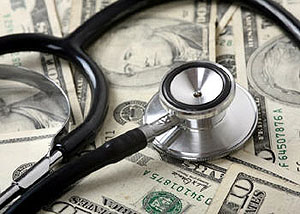
A paradox of medical costs is that people who can least afford them — the uninsured — end up being charged the most. Insurance companies, with large numbers of customers, have the financial muscle to negotiate low rates from health-care providers; individuals do not. Whereas insured patients would have been charged about $900 by the hospital that performed Pat's biopsy (and pay only a small fraction of that out of their own pocket), Pat's bill was $7,756. For lab work — and there was a lot of it — he was being charged as much as six times the price an insurance company would pay.

There are lots of things to hate about our current medical system, and all of us have our own favorite things to hate.  This is mine: the fact that the system massively overcharges you if you're uninsured, and they do it just because they can.  If you're uninsured, you've got no leverage, no alternatives, no nothing.  So you get screwed.  It's like the shopkeepers who charge twenty bucks for a pair of flashlight batteries after hurricanes.  Maybe it's the free market at work, but if so, that's all the worse for the free market.  In the healthcare biz, it just doesn't work.

Advertisement

Advertisement

Kevin Drum is a political blogger for Mother Jones. For more of his stories, click here.

Get Mother Jones by Email - Free. Like what you're reading? Get the best of MoJo three times a week.

Comments

Really Looking at a Medical Statement is a Shocker

I know what a shocker it is for me when I look at a Medical Statement and see what I have to pay with my insurance versus what the cost would be otherwise. It is incoceivable to me that this has been allowed to continue for so long. If people could afford to pay those rates, no one would need insurance.

If only there was some sort

If only there was some sort of organization that the people as a whole established to look after general welfare, oversee international trade, organize a military, etc. Does anyone have any comments on the effectiveness of state laws concerning the price of health care for the uninsured -- i.e. California AB774?

Maybe it is the free market at work.

Kevin, You are wrong about it being the free market at work. THERE IS NO SUCH THING AS A FREE MARKET HEALTHCARE SYSTEM! That premise is totally incorrect.

I think that's why his closing

sentence was "it [the free market] doesn't work."

This horrible practice has

This horrible practice has been known to me for years. It's despicable. That said, could there be some motivation for the health-care providers to be doing this other than straight-up greed? Surely they're not doing it because they enjoy driving poor people into bankruptcy. Are they using these absurdly large overcharges, the bulk of which have to go unpaid, as adjustments to their balance sheet to reduce their tax burden or something?

now that's a clever insight

I imagine its both straight up greed with the added fringe benefit of tax reduction.

competition

I got my new hip in India for $7k. No muss, no fuss, works great. If you want competition, medical tourism is the answer.

i'm glad it worked out for you

but we shouldn't have to travel halfway around the world to get reasonably priced medical treatment. And we also shouldn't have to sacrifice safety. I don't know what kind of regulatory system is in place to oversee the medical industry in India, but I doubt its as extensive as the US.

risk

I did a lot of research. It's a lot safer than you imagine. They have to compete, so independent parties track statistics on them such as infection rates and revision rates. Those numbers looked even better than those in the US. My particular doctor in India won on both cost and technical merit.

And to add insult to injury,

And to add insult to injury, many of the guilty receive enormous public benefits in the form of income and property tax exemptions and Medicare funding. I have found in my experience of assisting relatives who have massive medical bills, that physicians are usually willing to cut their bills if you maintain willingness to pay something. Hospitals, however, are almost always totally unreasonable.

go to an independent food store in poor neighborhoods

Go to an independent food store in poor neighborhoods, where everyday people pay several times what a grocery store would charge for the same product.

A few years ago, the IRS was

A few years ago, the IRS was coming down on nonprofit health care providers that were charging uninsured patients more than they charged insured patients. In essence, the IRS took the position that the differential in charges was inconsistent with their nonprofit status. I know from my own experience that this had some effect on the health care providers, since I mysteriously got a refund of the excess I'd had to pay over my insurance coverage for an unanticipated out of plan stay at a Cleveland Clinic hospital after the IRS started nosing about. There also were some class action lawsuits filed, some of which resulted in settlements. I don't know what's going on these days, though.

The Unfree Market

It's hardly a free market at work. It's the definition of an unfree market. In a free market, either side is free to walk away with no deal or to shop around. You planning to spend a lot of time comparison shopping during your next emergency medical event?

Its called price gouging

and in a lot of states its illegal (as long as you're talking about consumer goods as opposed to health care.) Personally, I'd rather get gouged on milk or flashlights than health care but that's just me.

My two cents...

I had an emergency appendectomy last October. I have insurance and the hospital's original bill was approximately $24,000 dollars for the operation. It was a laparoscopic surgery with no complications and I went home the next day. The final bill I paid because I have insurance was $2,300 dollars of which I had to pay out of pocket about $800 dollars. Price gouging anyone?

It might not be all greed on the provider's side.

That said, could there be some motivation for the health-care providers to be doing this other than straight-up greed? One possibility is that the insurance companies have wrung all the profit out of the business and the providers have to make up the lost margin where they can. That suggests to me that there will probably be something for health care providers to like in a successful health care reform package. It strikes me that the only ones that really benefit from the current system are the insurance companies.

greed?

While it may be partly greed, the payments are linked. Insurance companies negotiate that they will pay a percentage of the overall cost of a procedure--which, not surprisingly, raises the listed cost, so the hospital can recoup their money. But, the insurance companies also negotiate that uninsured patients must pay "the same rate"--meaning, the listed cost, which as stated is much higher than the insurance company pays (7756 for Pat's biopsy). It's ridiculous, yes--but, once again, I think the finger should be pointed back at the insurance company, not (or not just) the hospital.

There is no free market in health care

There certainly is a legal disconnect working here. It's fraud for the provider (hospital, physician, lab, etc) to charge one person less for the same procedure. However, somehow it's fine if the insurance companies are allowed to negotiate the price down while an uninsured individual does not have that right...or does he/she? Isn't there some kind of discrimination issue here? Lawyers? Anyone?

Self Insurance

I would be happy to self insure if it were possible. Give me an insurance plan with a $15,000 family deductible and pay 90% of the rest. The odds are I would never file a claim. The problem is that when I go to the emergency room for something and the bill is for $22,000 and then I see that United HealthCare is only going to by $645. I would love to be able to pay what the insurance company pays. Forget about the deductible, I would pay it all. Only I can't because the published rates that doctors and hospitals pay is just so huge.

They don't always charge

They don't always charge more. Or at least that's not how it's always been. About 10 years ago I had a scary mole I wanted removed, but was told it would cost $1000. I waited a couple years until I had insurance, and my out of pocket ended up being about $1000 (mostly because my preferred doctor sent the mole for biopsy at a nonpreferred lab, being newly insured and naive, I had no idea I was responsible for finding a lab for my doctor). Even without that overcharge, I wouldn't have saved that much by being insured, and it was definitely much more aggravating. I think my insurance paid well over $1000 as well. And I just got a phone in January with a number which must have belonged to a woman with major medical bills. They kept hounding me no matter how many times I told them I wasn't her (I'm a man, and of a completely different ethnic background). Finally I told them "sure, where do I send the check? (I wanted a name and address to report them for harrassment and disclosing her private information). They were surprised and then offered me an 80% discount if I would pay that day (strange, since I didn't ask for a discount). Not fair, since it screws your credit history up, but what they charge and what they'll accept are not necessarily the same. Part of it is that doctor's offices routinely factor their aged receivables out to collection agencies. They inflate the price so that they can recoup what they need when they sell the receivable. But that's not socialist byzantine red tape, that's the majic market efficiencies.

Price Games

I wonder about these exhorbitant prices for the uninsured. Surely this reality must play some part: The great majority of these uninsured costs are never paid. So why not always start with some arbitrary (insanely high ) number? All the better as a starting point for collections ('mam, we're willing to accept 50% payment on this, how does $200 a month sound?), as a negotiation ploy. Also, as other comments have said, perhaps inflating the value of unpaid claims has other advantages? (taxes, government subsidies, political)

When I had to go in and get

tagged as: 
When I had to go in and get my knee 'scoped, I inquired about the possibility of paying for it myself rather than have it go against my insurance, since we were in the process of switching plans and I wasn't sure if we wanted to take the hit on our premiums. I was quoted $37,000 for self-pay, combined hospital and surgeon. If I had it charged to my insurance company, they'd get billed $11,000. Same job, three times the price for cash payment (and even the 'cheap' rate was pretty outrageous for 30 minutes of outpatient surgery). Health care is and should be no more a market-driven concept than fire or police protection. It's a fundamental element of civilized society. Unfortunately, the real God of the US is the dollar, so you'll find too much resistance as long as certain Republicans...er...I mean 'people' - are around. My suggestion would be to institute a 5% payroll deduction, matched with a 5% employer contribution, the funds being assigned to the employee and/or his family to use in purchasing a local health care plan, with the doctors and hospitals being the ones offering the plans. THEN you have a market-driven health care program, but without the parasites known as Humana, Blue Cross, etc. Emergency care or life-threatening illnesses, it has to be understood, is not in the same realm as regular care or end of life care, and should be dealt with separately from a different fund. Obama needs to start pitching health care reform as a pro-business move, one which I'm sure most business people would be happy to embrace. Anyone who's ever sat down with an agent to try and figure out how to offer a health care benefit without bankrupting themselves knows what I mean.

Bad analogy

If you're uninsured, you've got no leverage, no alternatives, no nothing. So you get screwed. It's like the shopkeepers who charge twenty bucks for a pair of flashlight batteries after hurricanes. No it isn't. The price for items in great demand goes up and that keeps a small number of consumers from hogging the supply. I'm pretty sure that Ms. Tumulty's brother wouldn't start snapping up multiple kidneys no matter how cheap they were for him.

I used to work in

I used to work in billing/claims at a doctor's office and there is a very good (or bad, depending on your view) reason people without insurance get raped per visit: it is illegal to change your fees for a procedure just because someone is uninsured. Which brings us to the next question: Well, why the hell are the prices so high anyway? Easy: Different insurers pay different amounts for the same procedures, so in order to get the most out of one insurer the doctor must jack up the price for all insurers to match the one who will pay the most (because charging different insurers different prices is illegal). Never mind that the rest of the insurers only allow a fraction of that price. In order to get the most money out of one payer, the price must be high for all. Now before you go lighting torches and chasing after greedy doctors, realize yet another fact. Even though an insurer may allow $250 as the "allowable amount" for a simple visit, they typically only pay a fraction of that depending upon whether you've met a deductible and whether you are in or out of network. So it's completely possible that out of the $250.00 claim, the doctor will get $25...or even $0 from the insurer. Who knows what the price of these procedures should really be, because the system already has a built-in incentive to inflate the price since the full price is almost never really paid. It's like if you went to the store and told the cashier you were going to pay AT MOST only 70% of the price of milk. If he's smart, he'll just jack up the price of milk so he can offset his loss.

"her brother, Pat, who was

"her brother, Pat, who was diagnosed with kidney failure and then learned that the private insurance he'd been paying for for years wouldn't cover him. That's bad enough" Kevin, why don't you give the full story here? You make it sound as if he had a major medical plan. He was purchasing 6 month short term policies that are meant cover gaps like when you graduate college and haven't found a job yet, or are in between jobs. By definition these plans cannot cover pre-existing conditions because it would invite ridiculous levels of anti-selection. They fill a specific niche, and should not be used the way he used them. He was trying to get something for nothing, i.e. pay the lower cost for a plan that only covers you for a short time period rather than pay the cost of plan that would have protected him for the long term.

The reason for this is

The reason for this is sillier than you might think. The problem is that insurers pay a percent of the fee schedule, so if the provider wants $500 for a procedure and the average percent that insurers pay is 25%, the provider sets the fee at $2000. But if an individual walks in off the street, he is stuck with the fee schedule. Whatever the reason, this is a horrible side effect that hurts real people.

I'm thinking it is a side effect of the system

Think about it -- If you're a hospital, it is to your advantage to stake out an extreme position on costs because you know you're going to negotiate most of it away to the insurers. But the byproduct is that people who are not protected by the insurer pay the bogus rate, not the real one.

Not Just Healthcare

This makes me so mad and his been going on for years, you could have asked me or any other poor commenter on this board. And yes, hospitals are the worst and they absolutely refuse to divulge their special insurance rates to the uninsured, I should have hired a lawyer. Pretty much in anything you do in America (the whole world, perhaps?) If you're poor, you pay more. Food, travel, entertainment, essential services, taxes, it's all the same. The poor pay maximum or even inflated rates, the well-off get discounts.

Here's the deal.

tagged as: 
Here's the deal. Hospitals justify charging so much in order to make up for the uninsured people who are deadbeats (which happens to be most of them). As a result, the uninsured who are honest and naive get suckered into overpaying their hospital bills. Let me explain further. The saving grace in all this is that under our current legal system, unlike other unpaid bills, past due medical bills cannot legally be reported to the credit agencies and therefore cannot tarnish your credit. I.e. YOU HAVE NO REASON TO PAY THE BILL. The correct course of action, from a moral perspective (and the best outcome for all parties) in my opinion, is to contact the billing department of the hopsital and inform them that you are financially unable to pay the full amount of the bill. Tell them that all you can afford to pay is 20% of the bill (or whatever % of the bill you feel is fair or whatever insurance companies pay) and that you would pay that amount if they agree to reduce the amount due accordingly and eliminate the unpaid balance. If they give you a hard time just be firm that you feel no obligation to pay and will never do so. Their alternative is to send your bill to a collection agency whereby they will likely only expect to get about 10% of your bill (or something like that). Your take-it-or leave 20% is better than the 10% so they should accept your offer. You might want them to send you a new reduced version of your bill before you pay in order to avoid accounting confusion down the road. That is how you deal with this price gauging problem.

A fantasy

tagged as: 
I was considering the dire straits of many smallish cities and towns which pay their employees in part with health care insurance. As prices rise a lot of them will be looking for cost-cutting measures. Certainly the plan Obama et al are working on will help. But, I had a fantasy idea. Take, as an example, a city like mine, we have about 30K people and 2 major medical centers with a university medical school. Focus on city employees. Would it be unthinkable that the city (with state approval I suppose) might require all city workers receive care from any health care providers in the city and that the city would pay their bills at whatever rate the city can afford? It's not a free market approach for sure and it isn't a plan for large numbers, but it would certainly help cities ease their burdens. It also cuts out the insurance middle man which would possibly not reduce real payments to health care providers. After all, the cities are already paying far too much for that same health care. As a nation we're probably paying 30% too much. Could such a pact also be made by a large corporate employer and local health care providers? The idea of insurance is to spread the cost, but they've raised everyone's cost so much that they're losing their purpose. Even after spreading cost they're bankrupting us all. Where's the sanity in that?

It's illegal in the state of

It's illegal in the state of California to charge uninsured patients any differently than insured ones. As for the idea that "there's no alternative" to paying in full, that's false. Hospitals routinely offer discount plans based on income and assets. In California it's mandatory to offer such discounts under a law called AB774.

Kevin If you've read any of

tagged as: 
Kevin If you've read any of my comments here or at your previous gig, you know that I am mostly a free trader, but this is concept of such disparate prices is a practice that I also hate. One of the problems with health care is that you do not really have a free market operating at all. A free market takes educated consumers to work. Nobody really knows what is a fair price for a medical procedure because the price varies so much. I have a brother-in-law who is a doctor and he thinks this is ridiculous. The problems with health care I see are: 1. No one knows the true costs or what a fair price is. 2. People pay prices which vary sometimes by 1000%. 3. Same people that provide risk mitigation also negotiate the price. 4. People have come to expect that they can forget about paying health care bills. 5. Insurance is tied to employment. We do not need a national program to correct this. My ideas NATIONAL ISSUES - This issue is the only one which I think should be handled at the national level. It must be done this way because insurance easily goes over state lines. 1. Define two distinct businesses: a) Risk Mitigation : This is the classic insurance industry model. Many people pay into a common fund so that when one of them needs to be treated due to a CATASTROPHIC ( unplanned ) need ( disovery of disease, accident, etc. ) the funds are available for them. b) Club buying. People can bind together to have group buying power for elective procedures, pharmaceutical needs, annual exams... Use the power of the commerce clause and the US dept. of commerce to disallow any single entity from being allowed to be in both businesses at the same time. STATE ISSUES - These issues belong to the states. Nationalization of health care is I think a bad idea. I think a state strategy is much better. I really think smart liberals like yourself should stop trying to go for the big bonanza of National health care and settle with making some liberal state the model. 1. Allow any price to be set, but make it illegal to charge different amounts for the same procedure. 2. Provide a bare bones government policy which only covers catastrophic care. 3. Require all citizens to have health care insurance or accept the bare bones care. 4. Get back to thinking of medical bills as the same as any other bill, so people will not neglect them. Even I would go for something like this, and I am a staunch conservative. We simply have to break out of the current model where nobody really knows how much anybody pays for a procedure, all insurance is tied to workplace, and there really is no free market for health care.

"Where at least I know I'm

"Where at least I know I'm free?!" Please. Free to what? Grovel and worry, and work your fingers to the bone only to see the banks destroy or steal half your savings? The press doesn't expose the rip offs, and Congress doesn't stop the rip off parade -- credit card, medical, insurance, bank, and so on. If we got honest service from press and Congress, think how much more efficiently a free market could allocate resources.

$4,822 in hospital charges

$4,822 in hospital charges for a bag of I.V. electrolytes, a chest x-ray, and one night's stay watching TV and joking with the nurses. And the punchline: I've apparently reached an age--50--where a hospital seeks to protect you by asking a series of questions about your home life, which included the ironic, "Is anyone at home taking money from you against your will?" I said, "no," only because I couldn't predict the enormity of the bill the hospital would be mailing to my home.

Overpriced and ridiculous

The prices charged at all levels of the health-care system seem to have no direct relationship to actual costs. For example, you can download a free discount card (http://illinillinois.blogspot.com/2009/03/cheap-drugs.html#links) that gets you 20 percent off on prescriptions at thousands of pharmacies. Anyone can get this card. So why don't the pharmacies just dump the card and charge 20 percent less?

Post new comment

Alternately, you may login to or register an account
The content of this field is kept private and will not be shown publicly.
  • Web page addresses and e-mail addresses turn into links automatically.
  • Allowed HTML tags: <a> <ul> <ol> <li> <blockquote>
  • Lines and paragraphs break automatically.

More information about formatting options

MoJo Comments: Send Us Your Feedback

We changed our spam software to better filter comments. Should you encounter any issues, please let us know.

Photo Essays

The chaos and humanity of war.
The craftspeople and musicians of Appalachia.
A selection of '70s ads depicting African-Americans.
As climate change melts the permafrost, native villages slip into the sea, taking a way of life with them.