Credit Card Hell

| Tue May. 19, 2009 12:27 PM PDT

Ezra is obviously just pimping content from his new corporate overlords here, but today's Washington Post chat about the credit card industry really does make for interesting reading.  One of the things that comes through loud and clear is that people are almost universally paranoid about their credit scores.  And why not?  We live in a modern economy in which credit is essential, but your access to credit is determined by a process that's deliberately opaque, practically impossible to dispute, controlled almost entirely by credit issuers who make money when they lure you into practices that wreck your credit score, and wide open to fraud because the credit industry doesn't really care about it.
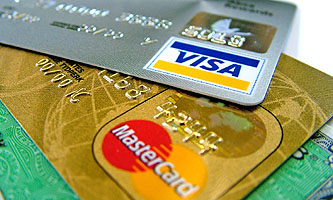
My solution?  For starters, credit scoring companies should be required by law to be far more transparent about their practices.  Beyond that, though, we need to give them an incentive to start caring about fraud: if the credit industry wrecks your credit score by allowing fraud, it's the credit industry that should pay the price, not you.  More here.
Advertisement

Advertisement

Kevin Drum is a political blogger for Mother Jones. For more of his stories, click here.

Get Mother Jones by Email - Free. Like what you're reading? Get the best of MoJo three times a week.

Comments

Beyond that, though, we need

Beyond that, though, we need to give them an incentive to start caring about fraud: if the credit industry wrecks your credit score by allowing fraud, it's the credit industry that should pay the price, not you.
Exactly. It's virtually impossible for the average American - say, just getting out of college or perhaps high school - trying to get into the world of credit and finance and loans etc. to have a clear understanding of just how it all works. "Opaque" barely begins to describe how nonsensical the credit reporting agencies operate. They really do work for the lenders and not the borrowers, and perhaps that dynamic is just utterly backward. After all, these same reporting agencies are responsible for giving high marks to very unstable institutions. The relationship there is incestuous at best.

Why do they get to say?

Another part of the problem is that you can have your credit score ruined even if you don't engage in irresponsible practices. I would like to cancel my old fee card with AMEX (a relic of my ancient past as a Foreign Service Officer), but since it is the single oldest item in my credit score, I am told I would be risking a major hit on my score if I did so - this in spite of the fact that I have a six figure pension, pay all of my cards in total every month as soon as the bill is issued, and have no other debt except a mortgage which is about 6 months from being paid off. The real question is why private entitites who operate for private purposes are allowed to have such pervasive power over people's lives.

"I have a six figure

"I have a six figure pension, pay all of my cards in total every month as soon as the bill is issued, and have no other debt except a mortgage which is about 6 months from being paid off." .... so why is it that you care what your credit score is? Not trying to be disrespectful. I'm just curious about why you think it matters. I never pay attention to my credit score, would never consider how it might change if I did this or that, and and honestly don't understand the obsession with it. FWIW, I have a wife and kit, I own a house (or own 2/3 and mortgage the other 1/3), and pay my bills on time, don't carry a cc balance, and have a decent salary. I'm in pretty good shape. I've always thought that the credit score obsession is relevant for those whose financial situation is more tenuous than mine, but your comment, and this post generally, have made me wonder. Thanks

Myths and obsessions

First, unless the US scoring providers operate rather differently than elsewhere (and I do not believe they do), the scoring system is at once dynamic (to pick up changes in relationships and also emerging mass-gaming) and rather more complex (that is multi-variable) than most people understand. As such people tend to obsess about simplistic factiods (if I shop in place X, my score is negatively effected), which are only actually true when combined with several other factors (and often trends). Second, Americans are just bizarrely obsessed with credit scores. Why the bloody fuck should you care? It's a bank risk rating tool, frankly I don't believe anyone should know their score - it just leads to perverse and often pointless behaviour (unless one is a statistician...). If someone like above is in retirement - and presumably has little need for debt, and hardly deeply effected in an overall analysis by the marginal influence of a score, why the fuck care? Otherwise, presuming the NYT summary of the law bills is correct, both versions seem fairly reasonable, with the possible exception of the forced interest rate reduction.

canceling old cards

dcsusie, I got the same crap from B of A about canceling a card I had had with them for about 15 years - i.e. my credit score would go down. Well so what! My mortgage is paid off, I have enough stashed so that I can live for at least a year if I lose my job, and enought to buy a new car when my old one breaks down, and I have another card with a slightly less predatory lender that has a longer history of credit worthiness. I don't expect my score to suffer that much. I don't think yours will either - you will get a big boost when you pay off your mortgage. They don't want you to cancel because soon they are going to charge those of us that pay off the balance every mongth an annual fee. I'm not interested in being gouged for that.

universal default in the new bill?

Does either the House or Senate version of the credit card bill prohibit universal default?

One boon for consumers is

One boon for consumers is limiting a practice known as "universal default," when a lender sharply increases a cardholder's interest rate on an existing balance because the customer is late paying that bill or other, unrelated bills. Under the new legislation, a customer would have to be more than 60 days behind on a payment before seeing a rate increase on an existing balance.

questions for Kevin

A few questions that I would really like to see answered by the blog: 1) In principle, do you think credit card companies should be allowed to be profitable? If someone extends you a loan and accepts risk for doing so, but you pay them back, should the cc company profit? If not, why should they extend you the loan? 2) Universal default and retroactive repricing, both bad, check. How do you feel about some kind of yearly review, where the cc company reviews your current credit situation, offers you new terms if you want to keep using the card, and lets you pay off your balance at the previous rate if you choose not to? 3) If you pay off your balance every month and only use a cc to get the rewards, this likely makes you an unprofitable customer. If the cc company decided that you were unprofitable and closed your account because of it, would you object, and why?

Obviously, you are employed

Obviously, you are employed in the credit card business.

One puzzlement for me has

One puzzlement for me has been how the credit agencies lower the score of anyone who cancells a credit card, even though it might not be in use anymore. What sense does this rule make??

Credit card usage == CDO quality?

Have credit rating agencies become like bond rating agencies wrt CDOs? Do you gain credit rating by being riskier to loan to, but potentially more profitable for the lenders because of fees & rate changes? Our financial system is really off the rails! Sure it should be a profitable business, but it should be done in a legitimate way and not make people's lives unbearable.

How about just a little

How about just a little chart that shows me what 1)opening another credit account 2)canceling an old credit card 3)using my card to purchase my monthly stuff and then paying off the balance do to my credit score. If I know what the consequences are I can make informed decisions when using my MisterCharge.

I think that a lot of the

I think that a lot of the stupid rules (lowering scores for cancelling cards) are not measures of the creditworthiness of a person, but of the extent to which he or she is or is not a mark likely to be profitable to the blood-suckers. This ought to be regulated. (Oh, I see MarkH is basically of this same view.)

Why do Americans care?

Why do Americans care? Because your credit score determines not just your access to and price for things like auto and home loans, but can impact your ability to get a job or rent an apartment, as well. It is utterly unfair that access to so many essentials of modern living is gate-kept through unaccountable companies who manage your score based on your profitability rather than your actual creditworthiness.

Post new comment

Alternately, you may login to or register an account
  • Web page addresses and e-mail addresses turn into links automatically.
  • Allowed HTML tags: <a> <ul> <ol> <li> <blockquote>
  • Lines and paragraphs break automatically.

More information about formatting options

MoJo Comments: Send Us Your Feedback

We changed our spam software to better filter comments. Should you encounter any issues, please let us know.

Photo Essays

The chaos and humanity of war.
What becomes of Janesville, Wisconsin, now that GM's left town?
The other side of Gitmo.
American Holidays