1913: Federal Reserve Act creates national banking system.
1914: Federal Trade Commission Act prohibits unfair or deceptive business practices.
1933: With memories of 1929 stock crash still fresh, Glass-Steagall Act separates “commercial banks” focusing on consumer activities (checking, savings) from “investment banks,” which deal with speculative trading and mergers.
1968: Truth in Lending Act requires banks to disclose loan terms & fees.
1970: Bank Holding Company Act Amendments first step toward weakening Glass-Steagall; allow commercial banks, via holding companies, to both accept deposits and make commercial loans.
1978: Supreme Court’s Marquette decision gives banks the right to make loans in states other than where they are headquartered; lenders rush to places with the weakest consumer protections, e.g. Delaware and South Dakota.

1980: After interest rates rise 13 percentage points in 2 years, President Carter signs law further hollowing out Glass-Steagall. The measure—pushed through by Sen. Jake Garn (R-Utah), a former insurance executive—demolishes usury caps for mortgages and raises bar for prosecuting lenders.
Jan 1981: Sen. Garn becomes chair of Senate Banking, Housing, and Urban Affairs Committee with fellow deregulation advocate M. Danny Wall as majority staff director. American Banker exults that “lobbyists here view Mr. Wall’s promotion as a gift swept to shore by the [GOP] tide last election day.”
1982: Sen. Garn coauthors Garn-St. Germain Depository Institutions Act, which deregulates savings and loan industry.
1984: S&Ls start crashing in Texas as oil boom peters out. More than 1,000 thrifts nationwide will fail between 1986 and 1995; debacle will cost $500 billion, including $124 billion in taxpayer money.
April 2, 1987: Sen. John McCain meets with federal regulators to discuss investigation of Lincoln Savings and Loan. The thrift’s owner, Charles Keating, was the senator’s business partner and campaign contributor, and flew McCain around on his private jet.
Sept: Drexel Burnham Lambert, home to “junk-bond king” Michael Milken, creates “collateralized debt obligations” (CDOS)—securities made up of myriad loans and bonds with different risk levels.
Dec 9, 1988: Silverado S&L collapses, leaving $1.3 billion taxpayer liability; board members include Neil Bush, who engineered loans to friends in what federal Office of Thrift Supervision will call “multiple conflicts of interest.” Bush later tells Congress a few of his deals may have looked “a little fishy.”
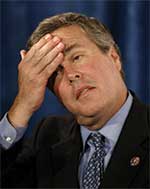
Feb 6, 1989: President George H.W. Bush bails out S&L industry; among those helped is his son, Jeb, as government takes over most of a $5 million second mortgage on his Miami office building.

Sept 30, 1995: Congress enacts Truth in Lending Act “reform,” easing regulations on creditors; bill powered through by Rep. Bill McCollum (D-Fla.), a key recipient of finance, insurance, and real estate (FIRE) donations ($136,000 in 1993-94).
Dec 22: As part of Newt Gingrich’s Contract With America, Congress enacts a measure making it more difficult to sue companies for securities fraud.
Aug 2, 1996: Office of Thrift Supervision issues rule preempting almost all state laws regulating S&L credit activities.
1997-1998: FIRE sector spends more than $200 million on lobbying and $150 million on political donations; top agenda items include repealing Glass-Steagall to facilitate mergers.
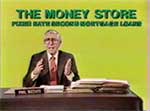
March 4, 1998: First Union acquires The Money Store, nation’s 5th-largest subprime lender (and home to ex-Yankee broadcaster Phil Rizzuto’s commercials).
April 1998: Citicorp and Travelers announce biggest-ever corporate merger ($70 billion); transaction technically illegal under Glass-Steagall; CEO Sandy Weill launches $12 million campaign to repeal law.
June 1998: Conseco purchases mobile home lender turned subprime powerhouse Green Tree in $6 billion deal.
July 1999: North Carolina General Assembly bucks deregulation trend, passing landmark measure to curb predatory lending.
Nov 1999: Gramm-Leach-Bliley Act guts Glass-Steagall, setting off wave of megamergers among banks and insurance and securities companies. Driving force is Sen. Phil Gramm (R-Texas), who has received $4.6 million from FIRE sector over previous decade.

June 20, 2000: Treasury and HUD urge Fed to investigate subprime units of major banks. No Fed action follows.

June 26: First Union closes The Money Store, takes $2.8 billion write-down.
Dec 14: As Congress heads for Christmas recess, Sen. Gramm attaches 262-page amendment to an omnibus appropriations bill. Commodity Futures Modernization Act will deregulate derivatives trading, give rise to Enron debacle, and open door to an explosion in new, unregulated securities.
Dec 27: American Homeownership and Economic Opportunity Act makes it harder for consumers to get out of lender-required insurance. National Association of Realtors lobbies hard for it, spending $9 million, plus $4 million in contributions.

March 6, 2001: FTC sues Citigroup and its subsidiary Associates, nation’s 2nd-largest subprime originator, charging “systematic abusive lending practices” involving 2 million borrowers; 18 months later Citigroup settles for a paltry $215 million.
April 6: Fed chair Alan Greenspan signals concern with “abusive lending practices that target vulnerable segments of the population and can result in unaffordable payments, equity stripping, and foreclosure.”
July 27: “‘Predatory’ is really a high-profile word with no definition,” Ameriquest chairman Stephen W. Prough tells Congress, urging rollback of subprime regulations.

April 22, 2002: Georgia’s new anti-predatory law signed; Ameriquest helps lead campaign against it and announces that it won’t do business in Georgia until law is changed. Standard & Poor’s refuses to rate Georgia mortgage securities, choking credit supply to state’s home buyers; law gutted within a year.
Oct 7: Swiss investment bank UBS announces that Sen. Gramm is joining it to “advise clients on corporate finance issues and strategy”; he will also lobby Congress, Treasury, and Fed on banking and mortgage issues as industry pushes to eliminate predatory-lending rules.
Dec 18: Conseco files for bankruptcy, mostly due to its purchase of subprime lender Green Tree. In all, 13 banks have failed during 2002—most, according to a Fed report, because of bad loans and “improper accounting related to the securitizing of assets.”

March 2003: HSBC acquires Household Finance, nation’s 4th-largest subprime lender.
May 1: New Jersey’s anti-predatory-lending law signed. Again, Ameriquest and other lenders launch campaign to kill it and Standard & Poor’s says it won’t rate certain New Jersey securities; law gutted within a year.

2004: Ameriquest employees give total of $200,000 to Bush campaign; founder Roland Arnall and wife Dawn give more than $5 million to pro-Bush PACS. Arnall later appointed ambassador to Netherlands.
Jan 7, 2004: Federal Office of the Comptroller of the Currency issues final rule to preempt states from applying most of their credit laws to national banks and their subsidiaries.

March 2005: Rep. Robert Ney (R-Ohio)—who will later go to prison on corruption charges related to Abramoff scandal—introduces Responsible Lending Act, billed as an anti-predatory-lending measure but in fact designed to preempt stronger state laws. Key supporters include New Century Financial, nation’s 2nd-largest subprime lender, which has contributed nearly $50,000 to Ney’s campaign. Consumer advocates call it “Loan Shark Protection Act.”
April: Bankruptcy Abuse Prevention and Consumer Protection Act makes it far harder for consumers (but not businesses) to discharge debts. Chief sponsor, Sen. Charles Grassley (R-Iowa), has received $2 million-plus from fire sector since 1989.
Sept 1: As housing bubble begins to deflate, administration economist Patrick Lawler announces, “There is no evidence here of prices topping out. On the contrary, house price inflation continues to accelerate.”
Sept 22: Illinois Supreme Court hands mortgage lenders a victory, blowing away a 3% cap on fees for loans with more than 8% interest.


Jan 23, 2006: Ameriquest settles 49-state investigation into deceptive subprime practices for $325 million.
April 27: Fed chairman Ben Bernanke acknowledges “signs of softening” in housing market, but says a “sharp slowdown” unlikely.
July 10: Henry M. Paulson Jr. sworn in as Treasury secretary, leaving job as Goldman Sachs chairman and CEO. In 2005, Goldman securitized $68 billion in residential mortgages and $23 billion in “other assets” primarily related to CDOS.

Jan 2, 2007: Rep. Barney Frank (D-Mass.) assumes chairmanship of House Financial Services Committee. FIRE sector tops his list of contributors, with total of $746,000 for 2005-06 cycle.
Jan 29: Paulson tells Congress, “One of the pleasant surprises I had coming to government has been the strong economy we have today.”
Feb 22: HSBC’s head of mortgage-lending business resigns. Its losses reach $10.5 billion.
Feb 28: Bernanke tells House Budget Committee the housing sector “is a concern, but at this point we don’t see it as being a broad financial concern or a major factor in assessing the course of the economy.”
Feb 28: New-home sales reported down 20.1% from previous year.
March 12: Sen. John McCain’s presidential campaign announces that Sen. Gramm will join it as cochair and economic policy adviser.
April 2: Subprime giant New Century Financial files for Chapter 11 after being forced to repurchase billions of dollars of bad loans.
May 3: UBS shuts down Dillon Read Capital Management, its US subprime arm. GM’s finance unit announces deep losses on subprime mortgages. SEC task force begins meeting to examine Wall Street’s handling of subprime loans.
June 9: In Wall Street Journal interview, former Fed governor Edward Gramlich accuses Greenspan of blocking a 2000 proposal to increase scrutiny of subprime lenders. Greenspan responds there are “a very large number of small institutions, some on the margin of scrupulousness and very hard to detect when they are doing something wrong.”
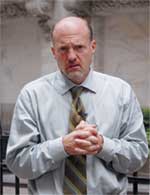
July 16: Jim Cramer, host of CNBC’s Mad Money, says the subprime “lending thing” is “completely meaningless…It has no relevance whatsoever.” Less than 3 weeks later, Cramer will have meltdown on air, pleading with Fed to cut rates and save Wall Street.
July 19-20: In congressional testimony, Bernanke cuts growth forecasts for 2007 and 2008, blaming problems in housing market; warns that subprime crisis could cost up to $100 billion.
Aug 6: American Home Mortgage, one of the largest US independent home-loan providers, files for Chapter 11.
Aug 16: Countrywide, biggest US mortgage lender, narrowly avoids bankruptcy by taking out emergency $11.5 billion loan.
Aug 31: Ameriquest goes out of business.
Sept 14: Sen. Barney Frank in Boston Globe: Mortgage crisis “was in large part a natural experiment on the role of regulation.” Sept 20: Treasury secretary Paulson tells House Financial Services Committee that “fundamental reappraisals in the pricing and appetite of risk have taken place numerous times…We are in the process of another such reappraisal.”
Sept 30: UBS announces 3rd-quarter losses of $690 million.

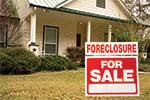
Jan 2008: Number of homes facing foreclosure up 57% compared to same month of previous year. US unemployment rises sharply.
Jan 10: Cleveland files lawsuit against numerous financial institutions alleging that their activities in connection with securitization of subprime mortgages created a “public nuisance.” (Litigation still pending.)
Jan 15: Citigroup reports $9.8 billion loss for 4th quarter and writes down $18 billion in subprime losses.
Jan 22 & 30: Fed makes biggest rate cut in 25 years—1.25 percentage points, to 3%.
Feb 6: Longest period of decline in nationwide house prices since 1990.
March 7: Former bosses of Merrill Lynch, Countrywide, and Citigroup questioned by a congressional panel about the $460 million in compensation they received between them during 5 years of subprime boom.
March 16: Bear Stearns announces takeover by JPMorgan Chase in Fed-engineered bailout; measure approved by Fed Board of Governors with fewer votes than required by law, under a post-9/11 “national security emergency” exception.
March 25: In speech on housing market, Sen. McCain calls for easing crisis by “removing regulatory, accounting, and tax impediments to raising capital.”
April 18: Jerry Bowyer, chief economist for financial services firm Benchmark, says in New York Sun op-ed that fault for subprime crisis “lies with the small army of hard-left political hustlers who spent the early 1990s pushing risky mortgages on home lenders. And the fault lies especially with the legislators that gave them the power to do it.”
April 29: Foreclosure activity reported up 112% from first quarter of 2007.
May 6: Bush announces he will veto legislation directing $15 billion to neighborhoods ransacked by foreclosures. Also threatens to veto legislation to provide $300 billion for struggling homeowners (and force lenders to renegotiate some mortgages) because it would be a “burdensome bailout” that “opens taxpayers to too much risk.”