One Good Thing About the Death of Newspapers

| Wed Mar. 4, 2009 10:30 AM PST
Wire-MoJo.jpg
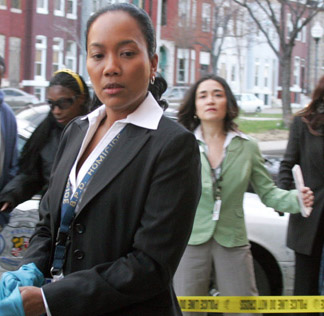
Bad thing about the death of newspapers: No more beat reporters to hold cops accountable.

Good thing: David Simon comes out of retirement to kick some ass on the streets of Baltimore.

In a recent Washington Post article, The Wire creator and former crime reporter looks into the shooting of an unarmed man by a police officer. The police department says it can't reveal the cop's identity; Simon calls BS and does the digging no other reporter—or blogger—is doing. And he concludes: "Half-truths, obfuscations and apparent deceit—these are the wages of a world in which newspapers, their staffs eviscerated, no longer battle at the frontiers of public information."

Amen. Every time a beat reporter gets canned or a daily is shuttered, a public official smiles. More of Simon's conclusions about the death of accountability journalism after the jump.

Advertisement

Advertisement

Simon continues:
There is a lot of talk nowadays about what will replace the dinosaur that is the daily newspaper. So-called citizen journalists and bloggers and media pundits have lined up to tell us that newspapers are dying but that the news business will endure, that this moment is less tragic than it is transformational.

Well, sorry, but I didn't trip over any blogger trying to find out McKissick's identity and performance history. Nor were any citizen journalists at the City Council hearing in January when police officials inflated the nature and severity of the threats against officers. And there wasn't anyone working sources in the police department to counterbalance all of the spin or omission.

I didn't trip over a herd of hungry Sun reporters either, but that's the point. In an American city, a police officer with the authority to take human life can now do so in the shadows, while his higher-ups can claim that this is necessary not to avoid public accountability, but to mitigate against a nonexistent wave of threats. And the last remaining daily newspaper in town no longer has the manpower, the expertise or the institutional memory to challenge any of it.


Dave Gilson is a senior editor at Mother Jones. For more of his stories, click here.

Get Mother Jones by Email - Free. Like what you're reading? Get the best of MoJo three times a week.

Comments

Affiliation

The problem with citizen journalism is that the blogger usually lacks any association with a major outlet. Without a some kind of affiliation or proffesional obligation they become sole agents of their investigation. They are in essence turned from a journalist to an activist, even if the function and results are the same. And we all know how much the police love activists. This situation makes them extremely vulnerable to reprisal from whoever they exposed. Most people will not take on this kind of personal responsibility or consequence. There will be some but without professional journalist we lose strictly on numbers alone. The death of print journalism is the death of most protections, and therefore investigative journalism on a massive scale.

Affiliation

The Death of print journalism also means a huge swing to tv journalism. Pablum ,spoon fed to the brains of the masses . Its a scary prospect.

So nobody but newspaper

So nobody but newspaper reporters have the incentive to investigate police corruption?

"Citizen journalist" = joke

It's not a simple question of standing. It's actually about training, institutional memory, craft and professionalism. If you read the article Simon got the info on the earlier shooting incident, as well as the identity of the officer, because he a) worked sources in the department he had developed over years of cover it and b) was able to find out about the non-existent wave of threats against police officers because he knew which unit covered these events and found sources there as well and c) he knew the history of the case that the department tried to use to claim that officers were really in jeopardy, again because HE HAD COVERED THAT BEAT FOR YEARS. A trained beat reporter is a reporter who knows that beat. He has sources, he has history, he isn't learning everything the first time he needs to know it. A "citizen journalist" is anyone with a computer. Are there citizen journalists covering beats systematically and for years on end as newspapers once did? It's not about standing or someone simply calling themselves a reporter. It's about the day-in-day-out druggery of covering a bureaucracy or agency, getting to know people, meeting them for beers, saving their home numbers, etc. Blogging can be interesting commentary. A citizen journalist, as a term, is an insult. It's like saying someone who is a good listener and cares about a neighbor's problems is a citizen social worker. You go to school to learn social work; it is a craft and a social science and training makes you good. Same with reporting. The arrogance of the internet is that armed with an opinion and a laptop and a search engine, everyone thinks they know how to do something that they haven't trained for, that they haven't put the real time and effort into, and that requires so much more than they even know. Not knowing what you don't know is the worst kind of ignorance.

Citizen Journalist

The comment about "citizen journalist" is right on the money. Journalism is a profession, generally not taken without passion for the craft.

David Simon

I could not agree with Simon more. Everytime I hear someone singing the praises of blogs and web sites and citizen journalism, my first question is who is going to pay for the indepth, investigative or enterprise reporting that requires months and maybe even a year or more of the time of one or more trained journalists. Blogs won't. They don't have the money. They can't pay the experienced, trained journalist who can do that type of reporting. There are good free lance writers operating blogs who can do quick one offs, reflections essentially on some event, but none that I know of doing the long investigative pieces. And that is espcially true on the local level. Newsday years ago devoted teams to uncovering the corruption in Long Island government. Who will do that now on the Web?

Death of Newspapers

... And the court ruling that bloggers cannot legally "protect" their sources' anonymity suggests that, in conjunction with what you say in your piece, accountability really is on the way out ...

Truly interrogative

Truly interrogative journalism died years ago, the argument over professionalism and institutionalised media is mute. We all (journo's) know that privilage and prizes became the incentive, not 'hard-hitting' frontline investigative reportage. The ruling elite are getting away with it now, like never before and have exponentially increased thier influence and control over the past 20 years. The need is for an industry (Internet,bloggers,citizen hacks etc.) recognised universal affilitiation of regional associations. Seperate but integral bodies that work toward the same goals established long ago for journalists that became the 'Media' we knew and respected some score years or so ago. Shallow sentimentality and glossy heartlessness, is all the 'Media' came to spew out, save for a few who now want for a job or new master. Organise and get on with the dialectics of a modern Media Industry that reflects contemporary society and its technology.

I agree that truly

I agree that truly investigative journalism has been dead for a while. I'm sure there are a few papers and journalists who are investigating police and public officials, but I think the majority of community newspapers don't want to rock the boat and are only reporting what the police departments want them to.

Post new comment

Alternately, you may login to or register an account
The content of this field is kept private and will not be shown publicly.
  • Web page addresses and e-mail addresses turn into links automatically.
  • Allowed HTML tags: <a> <ul> <ol> <li> <blockquote>
  • Lines and paragraphs break automatically.

More information about formatting options

MoJo Comments: Send Us Your Feedback

We changed our spam software to better filter comments. Should you encounter any issues, please let us know.

Photo Essays

A secret community of Chechen refugees.
Sustainable farms in California's Central Valley
Pollution, deforestation: Can the world survive Chinese consumerism?
The cost of oil exploitation.