Your Intifada: Now Made in China!

| Mon Jun. 22, 2009 12:34 PM PDT
keffiyehmotherjonesbig.jpg

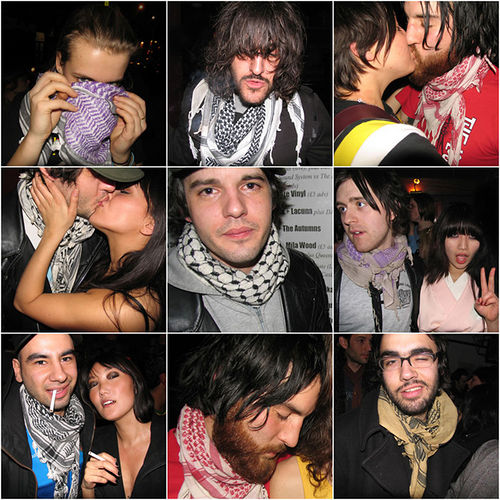
Oh, the keffiyeh hipster trend. How long have I waited, in vain, for you to die? Once upon a time, the keffiyeh (spelled many ways but worn only one) was headdress for PLO leader Yasser Arafat and symbol of Palestinian nationalism. Now, thanks to a late aughts explosion of popularity, the symbol of intifada is second only to the Che t-shirt for its global ubiquity and collegiate rebel chic. Today, you can buy this fashion juggernaut from half the street vendors on Earth for a cool five bucks. So with all this popularity, why is the the last keffiyeh factory in Palestine about to go out of business?
That's because the one you're wearing (and, increasingly, the ones Palestinians are wearing) are now made in China.
Here's how it happened: Back in '87, during the first intifada, intifadniks couldn't get enough of Palestinian-made $25 scarves. Looser export restrictions meant that Israelis could rep them too, and slowly but surely the scarf and its emblematic pattern began appearing in the West. By the time the second intifada happened in 2000, hardcore activists and the super cool already had them. Then the keffiyeh trend reached its tipping point, and hipsters' insatiable lust for the scarf lured Chinese manufactures into the gig. Fast forward a decade, and Chinese keffiyehs are the norm.
Ironically, global support for Palestinian-statehood-as-fashion-accessory has put yet another nail in the coffin of the Occupied Territories' beleaguered economy. What's next?

Advertisement

Advertisement

Sonja Sharp is an editorial fellow at Mother Jones. For more of her stories, click here.

Get Mother Jones by Email - Free. Like what you're reading? Get the best of MoJo three times a week.

Comments

colors

interesting post. This is beside the point, but yes, the black keffiyeh is a symbol of Palestinian nationalism, but isn't the red keffiyeh more traditionally Jordanian, and not necessarily Palestinian-Jordanian?

Red Keffiyeh

The Red Keffiyeh was symbolic of the communists, specifically the Marxist-Leninist Popular Front for the Liberation of Palestine (PFLP).

Yes and Yes...

...to both of you. Inside Palestine the red kaffiyeh is seen as representing leftist groups, which range from the former communist party (PPP), through the more socialist PFLP and DFLP parties.

Outside of Palestine, it is more commonly seen as Jordanian.

In London it is seen as neither.

"Ironically, global support

"Ironically, global support for Palestinian-statehood-as-fashion-accessory has put yet another nail in the coffin of the Occupied Territories' beleaguered economy. What's next?"

So we all have to keep our products obscure enough to fly under the radar of Chinese factory owners? Sounds like an excellent business plan. GM might get there yet.

the shemagh is a damn useful

the shemagh is a damn useful piece of kit
anyone who purchased one in Williamsburg or Silver Lake
should get a stomping

i doubt this is actually hipsters' fault

Here's how it happened: Back in '87, during the first intifada, intifadniks couldn't get enough of Palestinian-made $25 scarves. Looser export restrictions meant that Israelis could rep them too, and slowly but surely the scarf and its emblematic pattern began appearing in the West. By the time the second intifada happened in 2000, hardcore activists and the super cool already had them. Then the keffiyeh trend reached its tipping point, and hipsters' insatiable lust for the scarf lured Chinese manufactures into the gig. Fast forward a decade, and Chinese keffiyehs are the norm.

This article (on the first page of google results) says that Chinese competition started in the mid-90s, not the 2000s:

http://www.taipeitimes.com/News/feat/archives/2008/09/24/2003424004

“It’s the Chinese imports,” explains Yasser, sitting amid piles of keffiyehs at the Herbawi factory storeroom, just outside Hebron in the West Bank. “In the 70s we could barely keep up with demand, but by the mid-90s cheap Chinese scarves started coming in, because of globalization and GATT.” Yasser’s sons Abdel Atheem, 50, and Judeh, 43, nod in agreement and curse the trade tariff-busting deal. “We were forced to lower our prices and today we are working to a fraction of our capacity because we cannot compete.”

None of your links say that Western demand is what spurred the Chinese to start making keffiyehs, so it seems like you're just making stuff up.

HK

00000000000000000000000000000000

HK

000000000000000000000000000000000

HK

0000000000000000000000000000000

Re

Not only intifada. A lot of clothe is made in India.
Several India citizen gets only 1.5 dollar per day. That is the main idea of golden billion philosofy.

Now made in China

Such a shame that this is complete rubbish - Arabic headgear comes in three parts - the guffiye/keffiyeh which is the skullcap, the ghuttrah (the tablecloth) and the agal - the rope. Apart from that, not bad.

Post new comment

Alternately, you may login to or register an account
The content of this field is kept private and will not be shown publicly.
  • Web page addresses and e-mail addresses turn into links automatically.
  • Allowed HTML tags: <a> <ul> <ol> <li> <blockquote>
  • Lines and paragraphs break automatically.

More information about formatting options

MoJo Comments: Send Us Your Feedback

We changed our spam software to better filter comments. Should you encounter any issues, please let us know.

Photo Essays

The chaos and humanity of war.
The craftspeople and musicians of Appalachia.
A selection of '70s ads depicting African-Americans.
As climate change melts the permafrost, native villages slip into the sea, taking a way of life with them.