• Can Republicans Still Win as the Party of Straight-Up Racism?

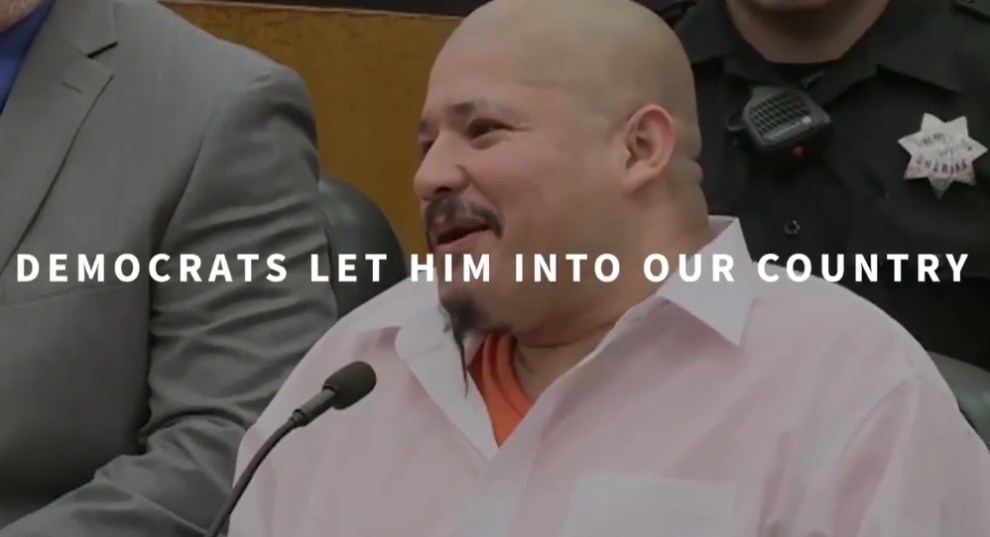
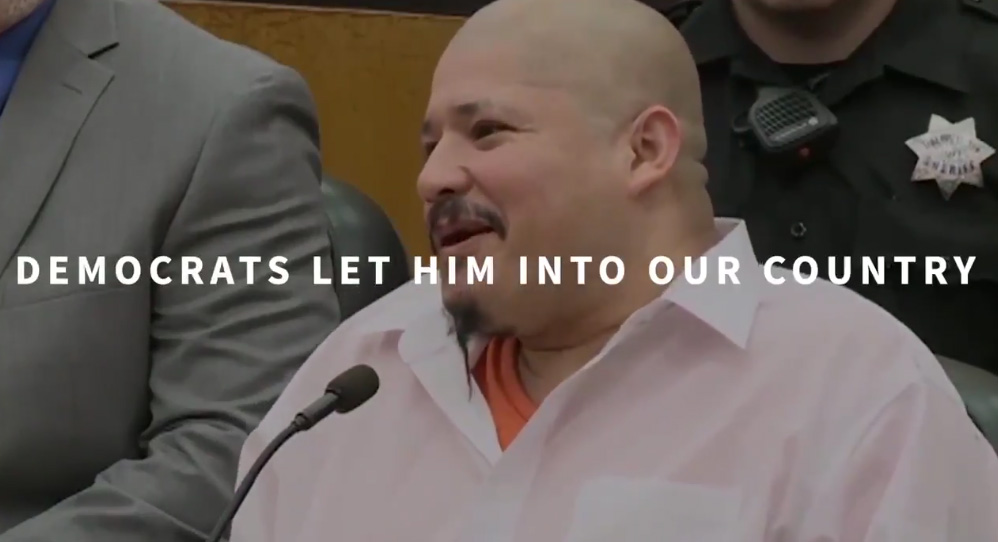
    The RNC created—and Donald Trump pinned to the top of his Twitter feed—an appallingly racist ad today that accuses Democrats of “letting in” Luis Bracamontes, a man who killed two Northern California deputies four years ago while in the country illegally. It’s widely viewed as Willie Horton 2.0, except maybe worse. So have any elected Republican officials denounced it? So far, I can find three:

    • Sen. Jeff Flake
    • Rep. Mike Coffman
    • Gov. John Kasich

    Don’t @ me if I got this wrong. Maybe there are four! Or even five!

    The level of desperation this shows is palpable. Trump and the Republican Party keep pulling the race lever harder and harder, but it’s not working. Trump went from 800 troops at the border to 5,000 troops to 15,000 troops. He called the migrant caravan a thousand miles away an “invasion.” He claims he’s going to end birthright citizenship even though he knows perfectly well it’s part of the Constitution and he can’t do it. The New York Times describes what’s happening:

    If the 2016 election hinged in large part on a rightward shift among working-class whites who deserted Democrats in the presidential race, Tuesday’s House election may turn on an equally significant and opposite force: a generational break with Republicanism among educated, wealthier whites — especially women — who generally like the party’s pro-business policies but recoil from strident, divisive language on race and gender.

    Rather than seeking to coax voters like these back into the Republican coalition, Mr. Trump appears to have all but written them off, spending the final days of the campaign delivering a scorching message about preoccupations like birthright citizenship and a migrant “invasion” from Mexico that these voters see through as alarmist.

    These aren’t dog whistles anymore, they’re just straight-up racist messages that are aimed directly at Trump’s working-class white base. And that’s Trump’s problem. He’s now had to turn the volume up so far that even the center-right suburban voters who held their noses and voted for him in 2016 can’t do it anymore. They can’t pretend they don’t see it. And because no one in the Republican Party dares to criticize Trump, he’s dragging the whole party down with him. Republicans are now the party of white racism, full stop.

    Sadly, they’re still going to get a lot of votes. But common decency, which took a vacation in 2016, is finally going to win on Tuesday. Trump is making sure of it.

  • Lunchtime Photo

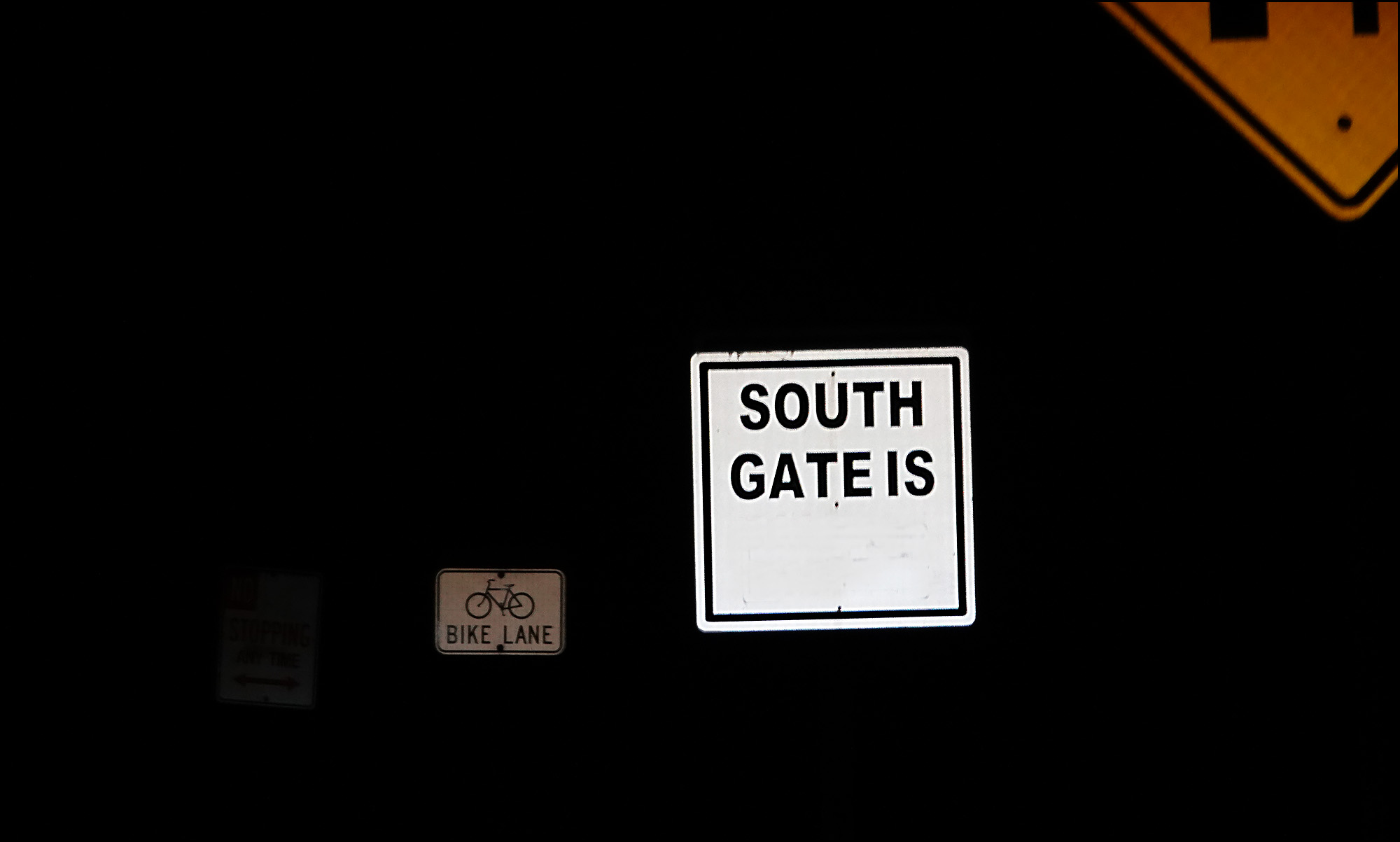
    As the week draws to a close, I leave you with this enigmatic yet profound declaration of self against an uncaring universe. South Gate Is. But is it? How can we know? In the 17th century Descartes believed existence was proven by his own consciousness. In the 18th century Johnson demonstrated it by kicking a stone. Kant later added German notions of rigor to the question of existence by distinguishing between the ding an sich and our mere observation of the thing, which was necessarily incomplete and ultimately unknowable. In the 19th century, advances in pure mathematics brought new insights, with existence implied by the Zermelo–Fraenkel axiomatization of set theory. In the 20th century, as modern science captured the popular imagination, Schrödinger insisted that existence was contingent on observation. Schrödinger’s cat thought Schrödinger was a crackpot, but put up with him anyway because he provided a nice bowl of cat food every day.

    In the end, despite the brave affirmation of this sign, perhaps we can never know whether South Gate truly is. And even if we did, what is it? The sign itself—rectangular, cold, and asymmetric—provides no clue, and anyway, south is a purely relative term. South of what? At the north pole, every gate is south. At the south pole, no gates are south. In space, the word lacks meaning entirely. We can therefore hardly accept South Gate Is as a statement of universality, but only as an aspiration limited in spacetime. Life sure is complicated, isn’t it?

    June 1, 2018 — San Onofre, California
  • White House Announces Plan to Screw the Working Poor

    Larry Kudlow speaks:

    The White House’s top economic adviser said Thursday that he opposes the federal minimum wage, arguing that the decades-old law is a “terrible idea” that drives up costs for small businesses across the country…..Kudlow also said the White House will again try to cut Obamacare and substantially reduce federal spending.

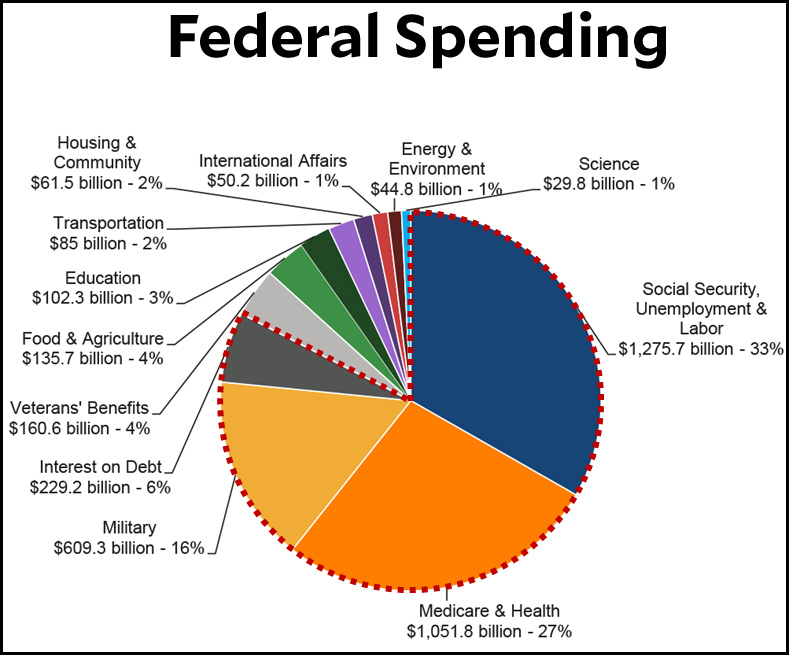
    Second things first: Kudlow says the White House wants to “substantially” cut federal spending without touching Social Security, Medicare, or (presumably) defense spending. Interest on the national debt is off limits too, of course. So what’s left? This isn’t worth a lot of work, so I just grabbed someone else’s pie chart of federal spending off the web. This happens to be for 2015, but nothing much has changed since then:

    The dotted line covers everything that’s off limits, so if Kudlow wants to “substantially” cut federal spending he’s going to need huge, swinging reductions in the small piece of the pie that’s left over.

    This is nothing new. We’ve seen it a hundred times from Republicans. The bottom line is that Kudlow wants to cut programs for the poor, since that’s just about the only thing left. What a surprise.

    And now to take first things second: it’s also not a surprise that Kudlow wants to do away with the minimum wage. But smart Republicans keep telling me that this is because there are smarter ways to help the working poor, like EITC or wage subsidies. So I guess Kudlow must be in favor of those instead.

    It’s funny, though. He didn’t mention any of them. Just an oversight on his part, I’m sure.

  • Climate Change Keeps Looking Worse and Worse

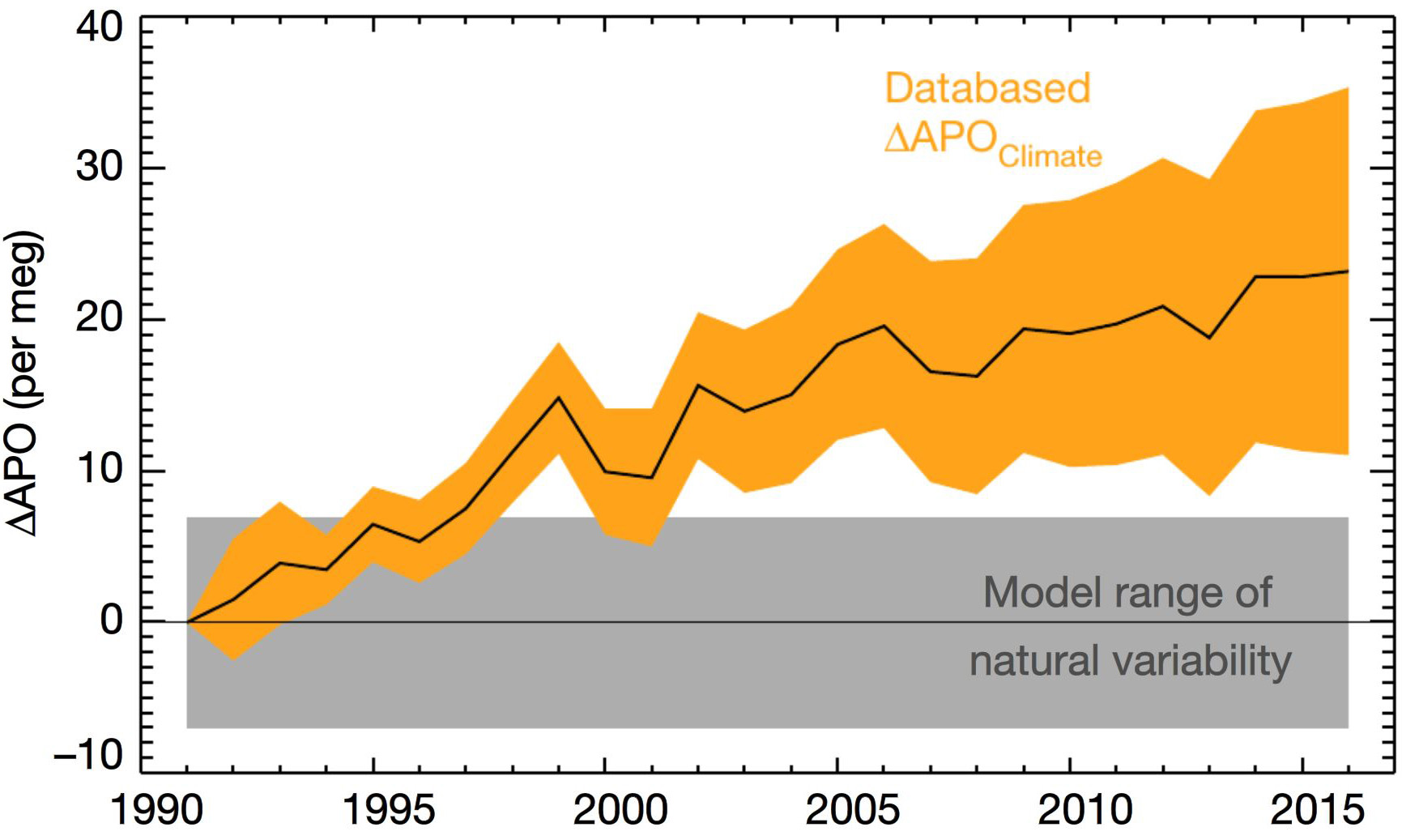
    More bad news on climate change, I’m afraid. A team of scientists has completed a highly accurate assessment of ocean temperature increases based on measurements of atmospheric oxygen and carbon dioxide. The hotter the ocean gets, the more of these gases you expect to find, so these measurements act as a “whole-ocean thermometer.” Here are the results in a nutshell:

    APO stands for “atmospheric partial oxygen,” and the chart shows the portion of ΔAPO that’s caused by climate change. This can then be reverse engineered to tell us how much ocean warming is caused by climate change.

    Other studies have recently produced estimates of ocean warming that are higher than we previously thought, and this one provides confirmation using entirely different methods. Needless to say, this is bad news: if ocean temperature is rising faster than we thought, it means that sea level is also rising faster than we thought. This is potentially disastrous for low-lying regions like Florida, Bangladesh, and islands in the western Pacific.

    But that’s not all. One of the key questions in climate change science is “sensitivity”: that is, how much temperature will rise based on a doubling of atmospheric CO2. This new estimate increases the lower bound from 1.5ºC to 2ºC, which in turn reduces the amount of CO2 we can emit and still keep global warming below the target range of 2ºC above historical levels.

    The odds of staying below that 2ºC target were always slim. Now they’re slimmer still unless we get serious about climate change mighty fast. So far, there’s not much sign of that happening.

  • Trump Goes There: It’s Willie Horton 2.0 For the Final Week of the Campaign

    Everyone is outraged by the latest video from the GOP. There’s no point in linking to the whole thing; I think this screen cap tells you all you need to know:

    The ad is all about Luis Bracamontes, who was in the country illegally when he killed two cops, followed by images of mobs allegedly tearing down flimsy fences in order to storm into the United States. I have two comments:

    First: The racist underpinnings of the ad are obvious, so there’s hardly any need to belabor them. This is Willie Horton 2.0 except worse, because it’s an official production of the Republican Party, not some outside Super PAC. It’s worth noticing, though, that the point of the ad isn’t to take down any particular Democrat, but to ruin the entire Democratic brand. The ad may be loathsome, but it’s smart.

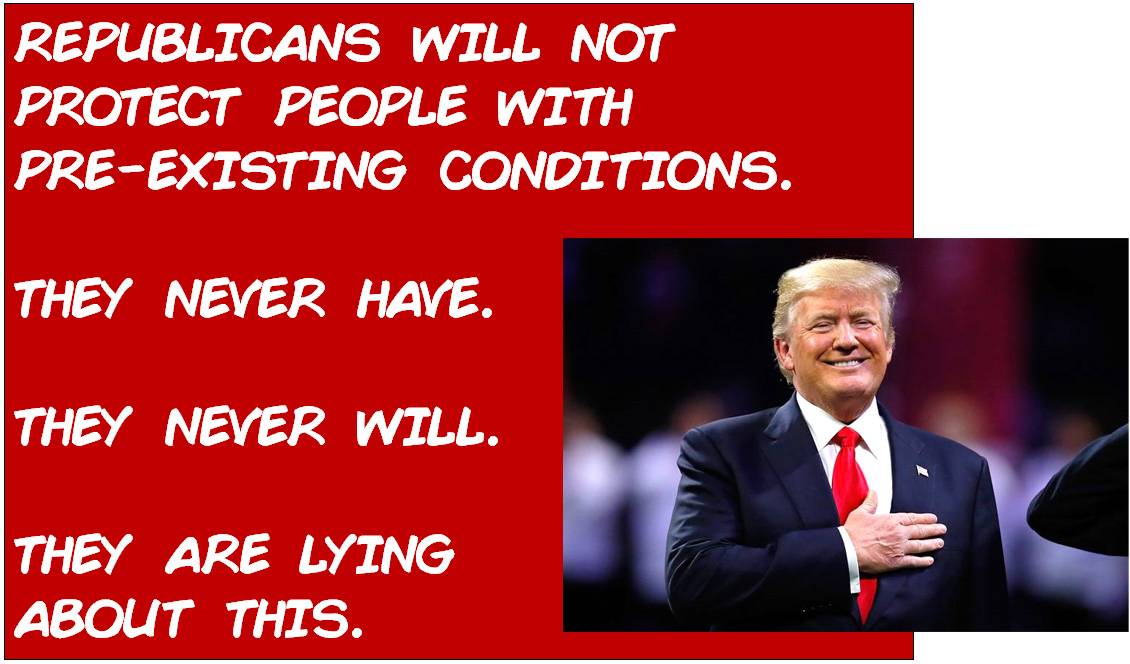
    So why aren’t Democrats doing the same thing to Republicans? Hell, Democrats don’t even have to be racist to do it. They don’t have to lie. The subject could be pre-existing conditions or corporate tax cuts or DACA or tearing infants away from their mothers. There are loads of totally legitimate subjects that could be dramatized and stuck squarely on the back of the entire Republican Party. So where are they?

    Second: Gustavo Arellano wrote an op-ed in the LA Times yesterday repeating the common point that Latinos may not turn out in huge numbers for Democrats this election. “Do not assume Latinos will show up, despite your hard work,” he says. Why? Well, sure, it’s true that Republicans are racist and proud of it. “Nationally, on the other hand, the Democrats haven’t done Latinos any favors. The North American Free Trade Agreement, courtesy of President Clinton, helped to destroy Mexico’s economy and forced millions to migrate to el Norte. Obama couldn’t get any immigration reform passed and cracked down on undocumented immigrants in such record-breaking numbers that activists labeled him the deporter-in-chief.”

    This drives me nuts. The peso crisis had nothing to do with NAFTA and was resolved quickly with plenty of help from the Clinton administration. NAFTA, for its part, has been a boon to Mexico. As for Obama, he did crack down on undocumented immigrants, but Arellano surely knows why: it was an effort to show that Democrats could control the border and make it OK for Republicans to pass a bipartisan immigration reform bill. But even that wasn’t enough, as the Republican base quickly revolted and prevented anything from being passed.

    No ethnic group is obligated to vote for a candidate or a party, regardless of how well they’ve been treated. But in the real world of real politics, what more could Latinos realistically expect? On the one hand, we have a Republican Party that’s all but promised to swoop up every Latino in the country by helicopter and then toss them into a moat on the other side of the border. They accuse them of being rapists and criminals; they tear infants away from their mothers; they fearmonger over caravans a thousand miles away; they refuse to support DACA.

    On the other hand, the Democratic Party could hardly do anything more for Latinos. They support DACA. They support immigration reform. They support driver license laws. They refuse to fund the idiotic wall. Their economic policies favor the working poor. They campaign endlessly in Latino neighborhoods and knock on hundreds of thousands of doors. Putting aside a dream world of unicorns and dandelions, the Democratic Party could hardly be more friendly toward Latinos and their issues.

    And yet, it’s not clear if Latinos are going to turn out in big numbers to vote for Democrats and give Trump a black eye. I get that, in the end, it’s always up to the party to do the persuasion. Nobody owes them anything. But how much more can Democrats do? I’m a clueless middle-class white guy. Educate me.

  • Lunchtime Photo

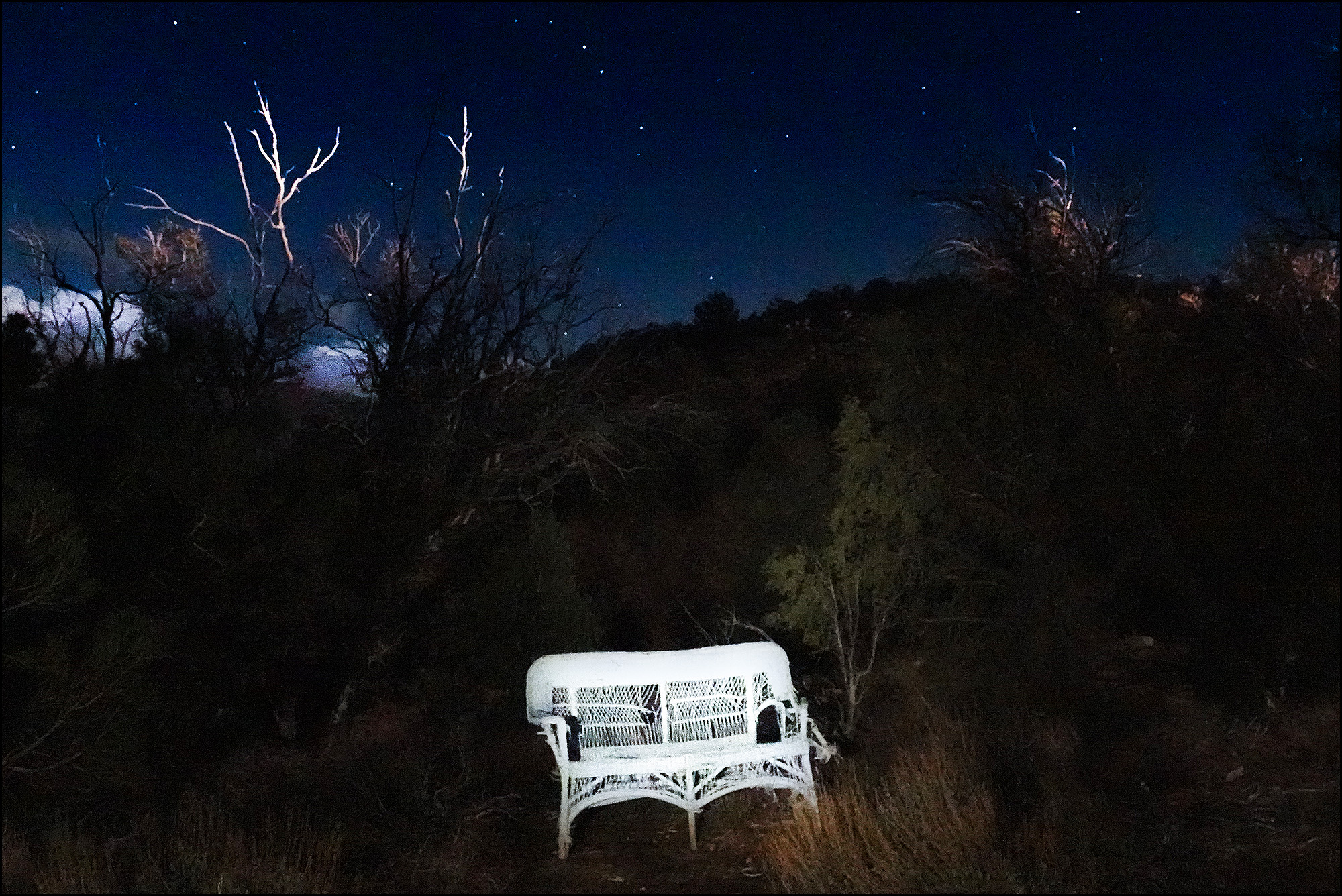
    When we were up at Big Bear, I figured I might as well try some night sky shooting. So off I went, driving the entire time with a nearly full moon staring straight at me. But I was oblivious. Only after I had finally gotten to my shooting spot did it suddenly occur to me that a nearly full moon meant that I wasn’t going to do any night sky shooting.

    I tried a bit anyway, but then gave up and turned my attention to taking pictures that benefit from a full moon. It turned out that the spot I had chosen was apparently some kind of local trysting and/or beer drinking location, because there was a beat-up old rattan couch sitting there surrounded by bits of trash. So I took a series of pictures of that, lighting it with my flashlight to get a sort of creepy Halloweenish look.

    Stay safe tonight, and keep all the cats inside.

    October 20, 2018 — San Bernardino National Forest, California
  • Video: Watch As America’s News Media Meticulously Covers Birthright Citizenship

    Yesterday morning I asked:

    Will the Media Fall For Trump’s 14th Amendment Stunt?

    More than 24 hours have now passed, which means I can render a judgment: they did not just “fall for it,” they morphed into an army of unflagging zombies who cared about nothing except ravaging the countryside for victims who would comment on the birthright citizenship clause of the 14th Amendment. Go see World War Z if you want to get the general gist of things:

    But as the pitch guys say on TV, there’s more! I didn’t know this when I wrote my post yesterday, but Donald Trump himself didn’t even bring up the subject of birthright citizenship. It turns out that Jonathan Swan of Axios was interviewing Trump and decided to bring up the subject out of nowhere. Why? God knows. But after Trump blathered about it for a bit without actually committing to anything, Swan asked when it would happen. “It’s in the process,” Trump said. “It’ll happen.”

    Everyone on the planet knows that this is Trumpspeak for “No one is working on it and I haven’t thought about it for a long time.”

    But it didn’t matter. Nor did it matter that everyone knows Trump can’t overturn birthright citizenship with an executive order anyway. Coverage was everywhere. Panels were hastily convened on cable TV. Learned academics wrote op-eds for the New York Times. Lawyers weighed in for the Washington Post. The usual suspects threw chaff in the air by insisting that it was an open question whether the 14th Amendment could be repealed by Trump’s signature. It was on the home page of every newspaper, every blog, every cable net.

    In short, it was insane. It started with a reporter who thought he was being clever and ended up with the collective might of America’s news media weighing in on a topic with less actual substance than Kim Kardashian. Is the entire industry embarrassed by how they handled this yesterday? I guess there’s no telling. But they should be.

  • Q3 Ends With Workers Getting Anemic 0.4% Raise

    The Washington Post reports fabulous news:

    U.S. workers are seeing the largest wage increase in a decade, the Labor Department reported Wednesday….The typical worker received a 2.9 percent raise from September 2017 to September 2018, according to the Labor Department’s Employment Cost Index, a widely watched measure of pay….Sluggish pay growth has been one of the biggest problems in this recovery, but employers are finally having to hike wages at a more normal level typically seen during good economic times. Unemployment is at a 49-year low and there are more job openings than unemployed Americans, which forces companies to fight for available workers.

    I am so tired of this shit I could scream. Is it a deliberate lie? Is it because news reporters don’t understand what inflation is? Is it because they take any opportunity to report that something is the biggest, largest, heaviest, or best?

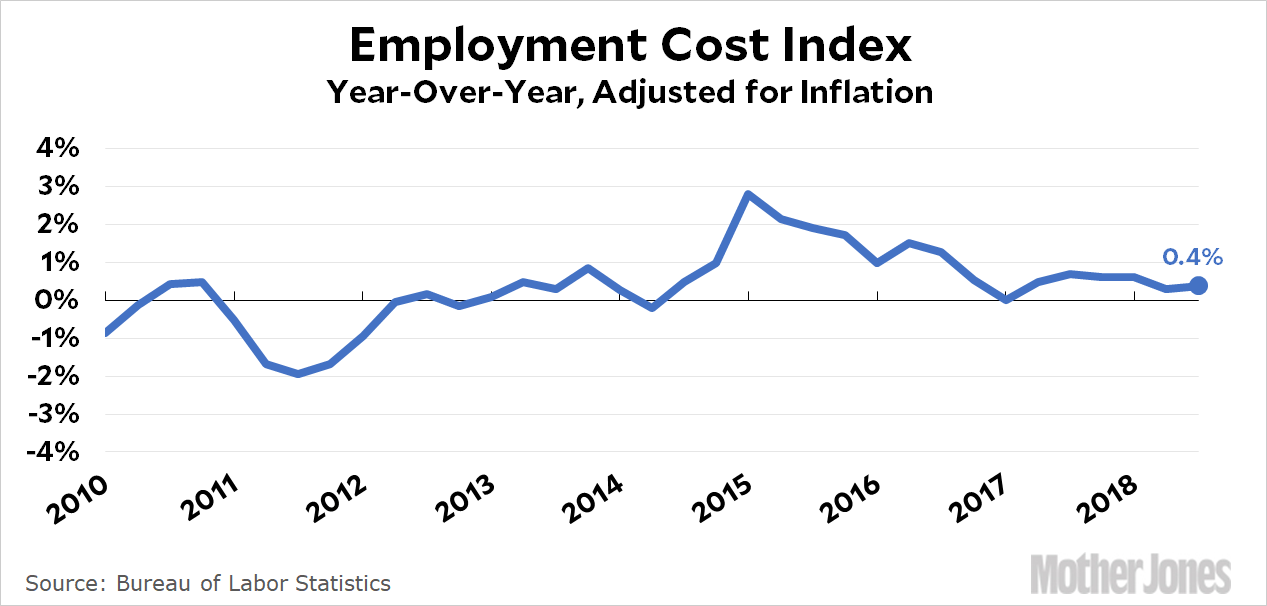
    I don’t know. But if you want to know how much wages and earnings have gone up over the year you have to adjust for inflation. FFS. How hard is that? And when you do, here’s what you get:

    This is not the largest wage increase in a decade. It’s not even the largest wage increase in the past year. Or the past two years. Or the past three years. Or anytime at all.

    What it is, is a fairly anemic 0.4 percent increase in wages over the past year. That’s better than nothing, but it’s nothing to write home about, especially when employment is supposedly tight and the economy is supposedly expanding like a rocket. In fact, the real question to ask when you see something like this is not: Wow, workers are doing well. It’s: If workers are hardly getting anything, then who’s getting all the extra money the economy is generating?

  • Social Media Is Making the World a Better Place. Quit Griping About It.

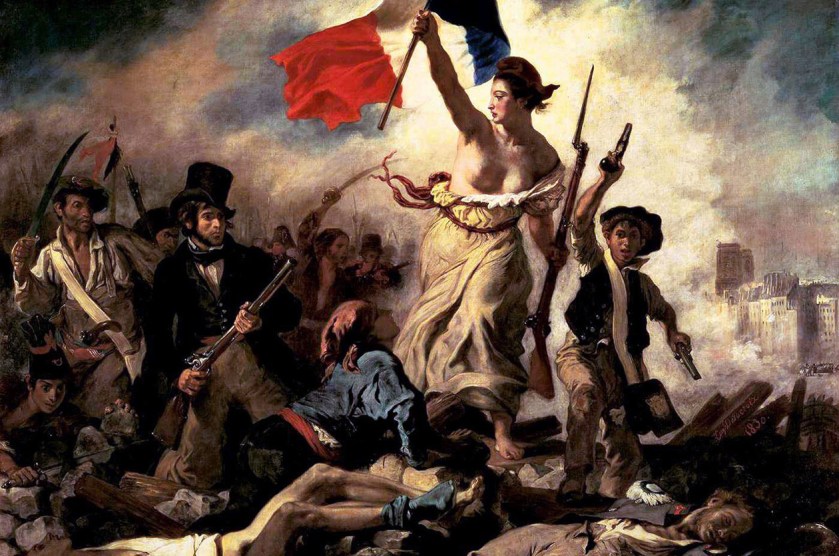
    Eugène Delacroix, "Liberty Leading the People"

    Frank Bruni expresses today what I think is a common opinion:

    Nora Ephron once wrote a brilliant essay about the trajectory of her and many other people’s infatuations with email, from the thrill of discovering this speedy new way of keeping in touch to the hell of not being able to turn it off. I’ve come to feel that way about the whole of the internet.

    What a glittering dream of expanded knowledge and enhanced connection it was at the start. What a nightmare of manipulated biases and metastasized hate it has turned into. Before he allegedly began mailing pipe bombs to Barack Obama, Hillary Clinton and others, Cesar Sayoc found encouragement online — maybe not in the form of explosives instructions, but in the sense that he could scream his resentments in a theater that did the opposite of repudiating them. It echoed them back. It validated and cultivated them. It took something dark and colored it darker still.

    ….I don’t know exactly how we square free speech and free expression — which are paramount — with a better policing of the internet, but I’m certain that we need to approach that challenge with more urgency than we have mustered so far. Democracy is at stake. So are lives.

    I realize that this might not be the most opportune moment to persuade you otherwise, but I’d like to offer a far different take.

    I once wrote that the internet makes smart people smarter and dumb people dumber. Likewise, it might very well make good people better and bad people worse. But on average, that doesn’t mean the world is a worse place. So why does it seem so much worse?

    That’s pretty easy: the internet boasts an immediacy that allows it to pack a bigger punch than any previous medium. But this is hardly something new. Newspapers packed a bigger punch than the gossipmonger who appeared in your village every few weeks. Radio was more powerful than newspapers. TV was more powerful than radio. And social media is more powerful than TV.

    Contrary to common opinion, however, this has little to do with the nature of these mediums. Sure, they’ve become more visceral over time: first words, then pictures, then voice, then moving images, and finally all of that packaged together and delivered with the power of gossip from a trusted friend. But what’s really different is how much time we spend on them—and by this I mean the time we spend on news, not crossword puzzles or Gilligan’s Island. We are addicted to our smartphones, and that means we spend far more time absorbing news than we used to with TV or radio. There’s the news we actively seek out. There’s the news we get after acccidentally clicking on something else. And then, just to make sure we don’t miss one single thing, there’s the news that’s forced on us because we’ve set up our smartphones to buzz and beep at us when something happens.

    Does all this mean that there’s more news than ever before? Of course not. Does it mean that there seems to be more news than ever before? Oh my, yes.

    And that brings me circuitously to my point: broadly speaking, the world is not worse than it used to be. We simply see far more of its dark corners than we used to, and we see them in the most visceral possible way: live, in color, and with caustic commentary. Human nature being what it is, it’s hardly surprising that we end up thinking the world is getting worse.

    Instead, though, consider a different possibility: the world is roughly the same as it’s always been, but we see the bad parts more frequently and more intensely than ever before. What has that produced?

    Well, sure, it helped produce Donald Trump. There’s a downside to everything. But what it’s also produced is far more awareness of all those dark corners of the world. And while that may be depressing as hell, that awareness in turn has produced #MeToo. It’s produced #BlackLivesMatter. It’s produced a rebellion among the young. It’s produced the #Resistance. It’s produced more awareness of extreme weather events. It’s produced an entire genre of journalism, the health care horror story, that in turn has produced a growing acceptance that we need something better.

    I could go on, but the point I want to make is simple: if you want to make things better, you first have to convince people that something bad is happening. Social media does that. Hoo boy, does it do that. But this is a good thing, even if it doesn’t always feel that way. Shining a light on the dark corners is the first step toward getting people to give a damn, and for all its faults social media is absolutely stellar at doing that.

    And that’s what we’ve wanted all along. Right? It produces a huge amount of rage and depression and even violence along the way, but this has always been the price of social progress. You’ve always understood that, haven’t you? You never thought that progressives could get what they wanted just by singing kumbaya, did you? So quit complaining about all the rage and depression and violence that social media is supposedly responsible for. It’s not. These things are nothing more than an inevitable byproduct of forcing people to see what they don’t want to see, and that’s what we’ve wanted all along.

    Right?