• Friday Cat Blogging – 22 September 2017

    I have been gravely disappointed by the Irish cat situation. I figured cats would be roaming all over the place, and I’d be able to easily take enough photos to keep catblogging going for the entire vacation. But it’s been tough sledding. I saw a cat in Waterville, but it ran away. Our house is at the top of a hill, and there’s a sociable cat down at the bottom, but just as he came over to make friends a car rumbled by and he ran off. I haven’t seen him since.

    Finally, though, Kenmare came through with perhaps the friendliest cat on the planet. This cat was so eager for attention that she came running out even though it was drizzling rain and her fur was wet. In fact, she was so friendly it was hard to take a picture of her. Every time I pointed the camera she came running up so close that all I got was out-of-focus fuzz.

    That makes this picture appropriate. She’s about six inches away in this one. I think she had just finished rubbing her cheek on my camera bag and then came rushing over to get her head scratched. She was friendly with everyone else who walked by too. Truly a delightful cat, even if she wasn’t smart enough to come in out of the rain.

    The future of catblogging is uncertain. Unless my luck changes, the next few weeks will be filled with either file photos of Hilbert and Hopper or pictures of other animals. I have quite a few of those. Feel free to put in a request for a specific (plausible) animal if you like. So far I have horses, cows, goats, sheep, butterflies, and birds.

  • The Republican Plan On Taxes Is to Declare That the Deficit Is Whatever They Say It Is

    Republicans are getting ready to pass a humongous $1.5 trillion tax cut. But Senate rules require tax bills to either pass with 60 votes or else be deficit neutral. Obviously Republicans aren’t going to get any Democratic votes for cutting taxes on the rich, so that means they need to avoid increasing the deficit. But if you cut $1.5 trillion in revenue, how is that possible? Easy peasy:

    There is a growing willingness within the GOP to embrace controversial, optimistic estimates of how much economic growth their tax plan would create. Those upbeat estimates, often rejected by nonpartisan economists, would supplant the traditional forecasts offered by official scorekeepers at the Congressional Budget Office and Joint Committee on Taxation, helping lawmakers argue that the plan would not increase the national debt.

    Why bother? Even the most optimistic supply-sider couldn’t come up with a way of making a $1.5 trillion tax cut literally 100 percent self-funding. The only way to get there is to simply plug the numbers you need into a spreadsheet and declare, “That’s it. That’s our estimate.” If they’re going down this road, that’s what they might as well do.

  • A Few Red States Lose Under Graham-Cassidy, But Not Many

    Axios reports on winners and losers under the Graham-Cassidy health care bill:

    A new estimate obtained by Axios from the Centers for Medicare and Medicaid Services (CMS) projects that Alaska, home to key swing vote Sen. Lisa Murkowski, would lose 38% of federal funding for premium subsidies and Medicaid by 2026 under the Graham-Cassidy proposal. John McCain’s home state of Arizona would also lose funding (-9% in 2026).

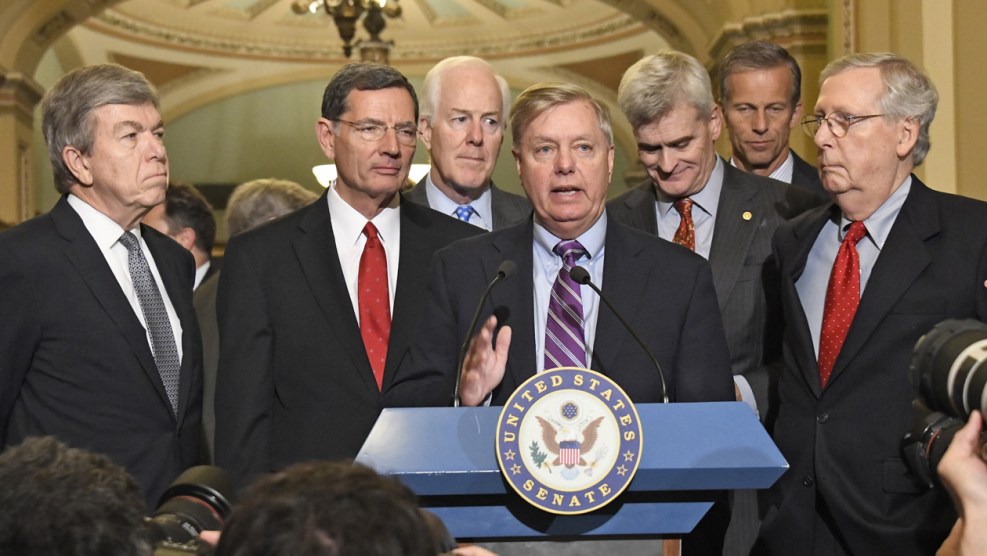
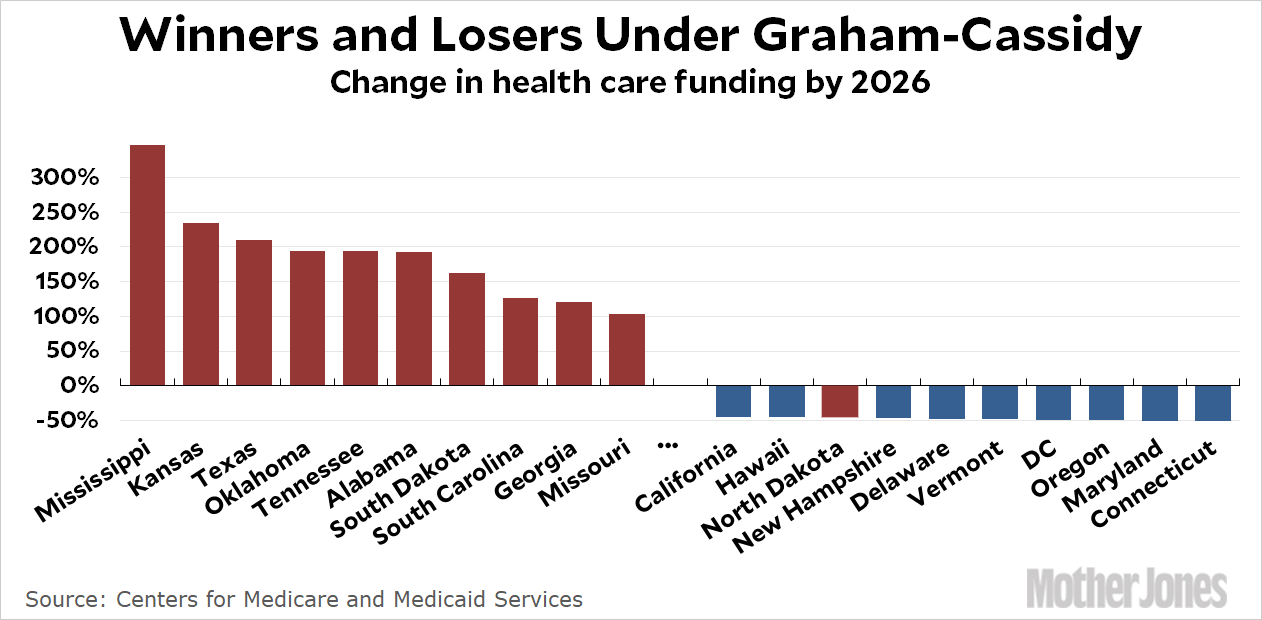
    This is hardly a surprise. Since Graham-Cassidy cuts health care funding overall, it was always going to be hard to prevent at least some red states from losing funding too. What’s actually impressive about the bill is how good a job they did of keeping the cuts mostly restricted to blue states. Here are the top ten winners and losers:

    There are a few red state losers in the complete list, but not many. Among the big losers, only about half a dozen are red states. And the reddest of red states are all huge winners. Maybe they created the formula using the same computer that Republicans use to gerrymander themselves.

  • Tom Price Missed a Meeting Because of a Flight Delay Once

    The Gulfstream G280 is an aircraft so powerful and aerodynamic it redefines the performance and capabilities of super-midsize business aircraft. According to Gulfstream, anyway. It's also perfect for busy cabinet officials.Russian Look via ZUMA

    Why does HHS Secretary Tom Price charter private flights for his official travel? The Washington Post has the story:

    After Tom Price was sworn in as health and human services secretary, the Georgia Republican faced an inconvenience known to millions of Americans: His flight was delayed, an aide said, and he was forced to spend hours at an airport. The delay left Price a no-show at an early public appearance his office helped plan.

    A flight delay!?! Color me convinced! In fact, I recommend that the federal government purchase a fleet of planes especially for use by cabinet secretaries. They are far too important to be subject to the indignity of mingling with the little people and suffering the vagaries of commercial airline travel.

    Don’t worry, though. The next time a Democrat takes office we can sell off the fleet, since it would then be an obvious waste of money by Beltway elites who care nothing about how they spend the hard-earned money of honest taxpayers.

  • New Report: Fraternities Help Mediocrities Succeed

    Dan Wang points to a recent paper which suggests that joining a fraternity in college reduces your GPA by 0.25 points but increases your future income by 36 percent. For various reasons, this is a weak result and I wouldn’t take it very seriously except as a possible spur to further research.

    However, suppose it’s true. Here’s what the authors say:

    Our results indicate that college administrators face an important trade-off when they consider policies designed to limit fraternity life on campus: while such policies may significantly raise academic performance, these gains may come at a significant cost in terms of expected future income for their graduates.

    I’d argue exactly the opposite: this paper puts another nail in the coffin of fraternities and sororities and eating clubs and so forth. Allow me to reframe the authors’ conclusion:

    Our results provide empirical evidence that fraternities are just another way for social elites to keep themselves at the top regardless of actual performance. Those rejected by fraternities, even though they have higher GPAs, earn 36 percent less than those accepted by fraternities. This is further evidence, if any were needed, that college administrators face few trade-offs when they consider policies designed to limit fraternity life on campus.

    That’s my read, anyway. And I don’t even have any big heartburn one way or the other about fraternities.

  • Did Lead Poisoning in Flint Cause an Epidemic of Stillbirths and Miscarriages?

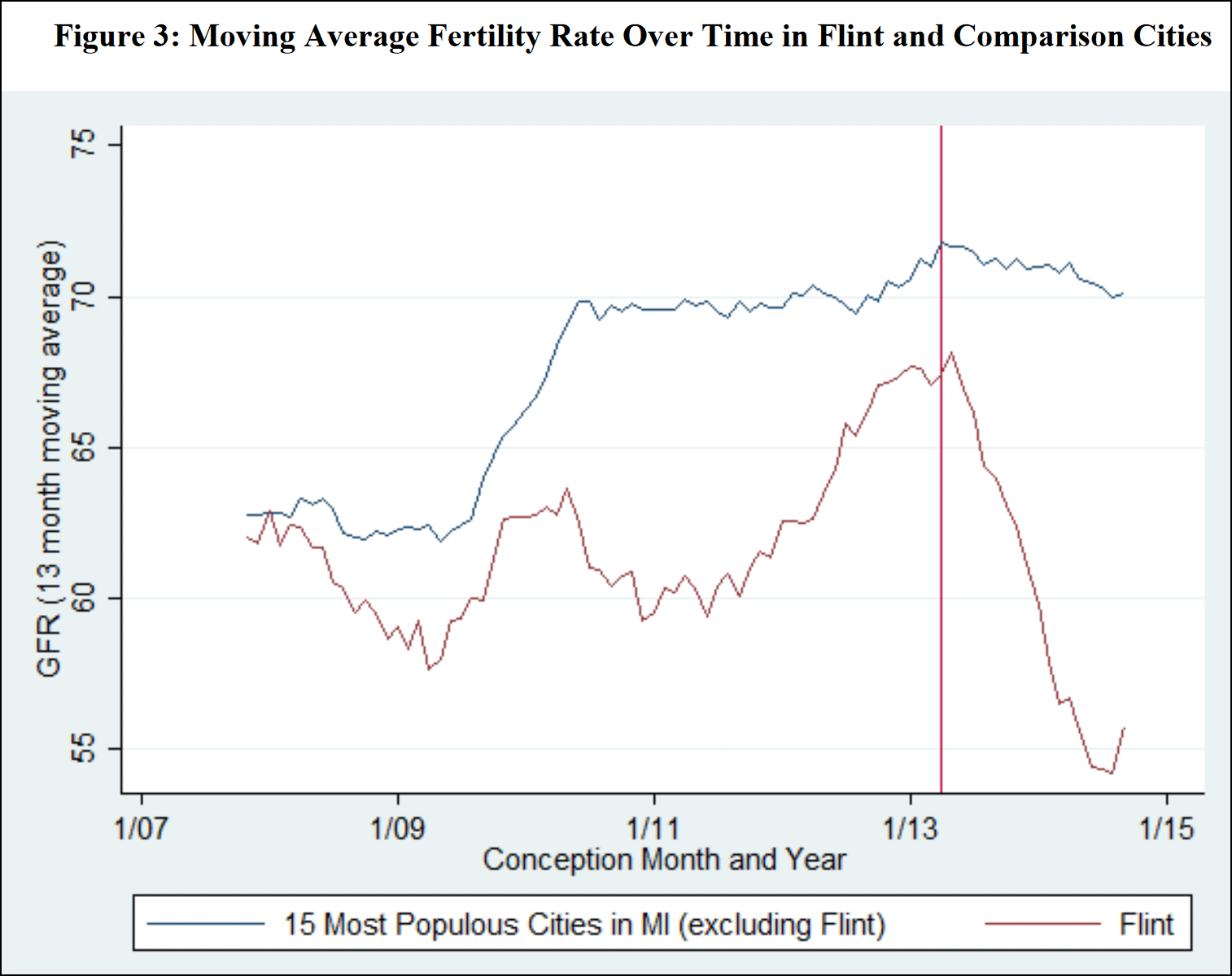
    Several people have pointed me to a recent paper that investigates the effect of Flint’s lead-poisoned water on fertility rates. Here’s what it looks like:

    This is stunning: the gross fertility rate plummets from 67 to 54 when Flint switches to water from the Flint River. That’s a 20 percent decrease in less than two years.

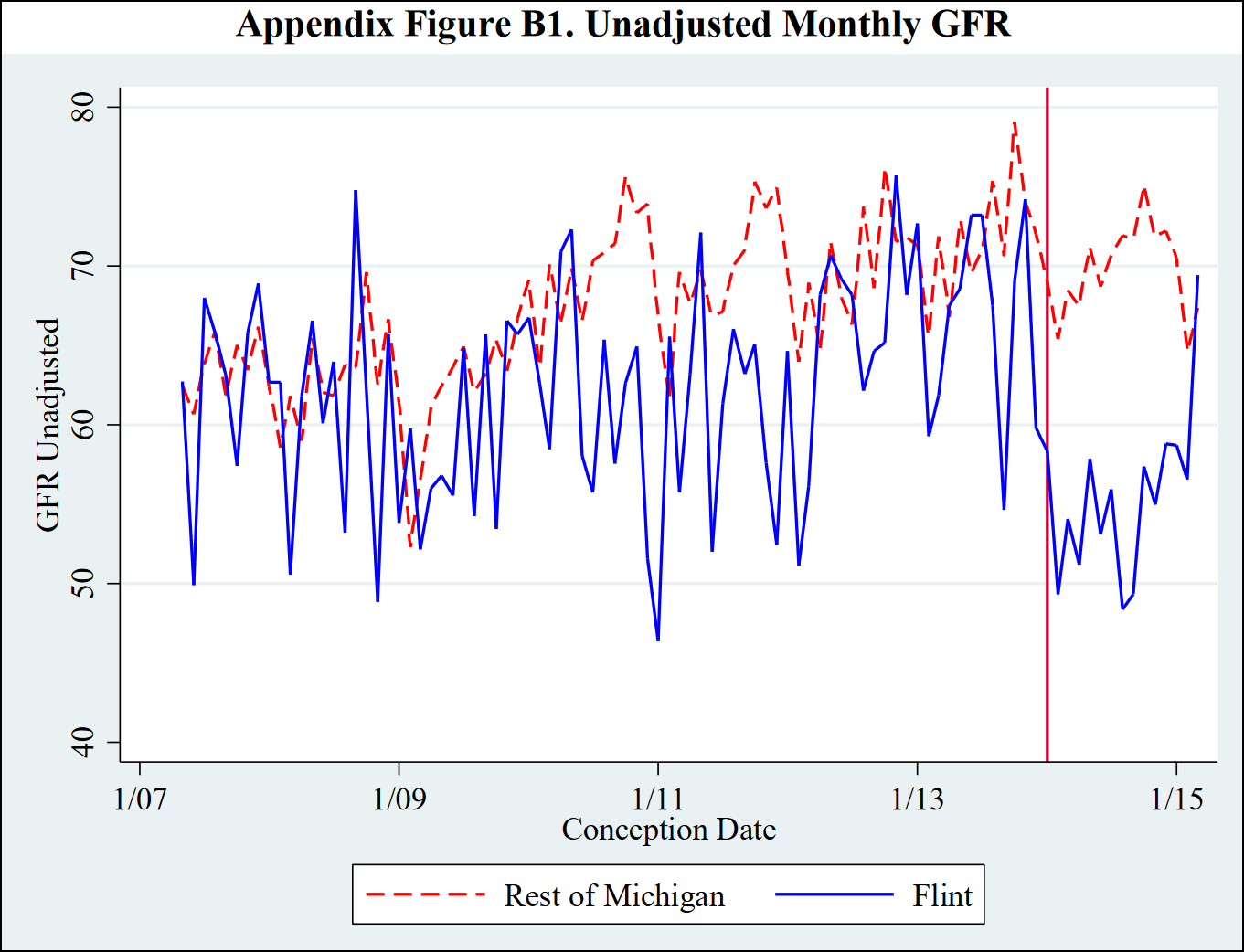
    But I’m skeptical. First off, I’m not sure why the authors use a moving average. It’s to “remove both seasonality and idiosyncratic noise,” they say, but a moving average is a pretty crude tool for doing that. Here’s the unadjusted chart:

    That’s a lot of noise all right. The problem is that Flint switched its water supply in April 2014, while the red line represents January 2014. This means that fertility dropped enormously from December 2013 to February 2014—and then nothing more happened. Women who conceived in November and were thus exposed to bad water for four months had high fertility rates, while women who conceived a month later and were exposed to bad water for five months had dramatically lower fertility rates. That’s a helluva response to one extra month of exposure.

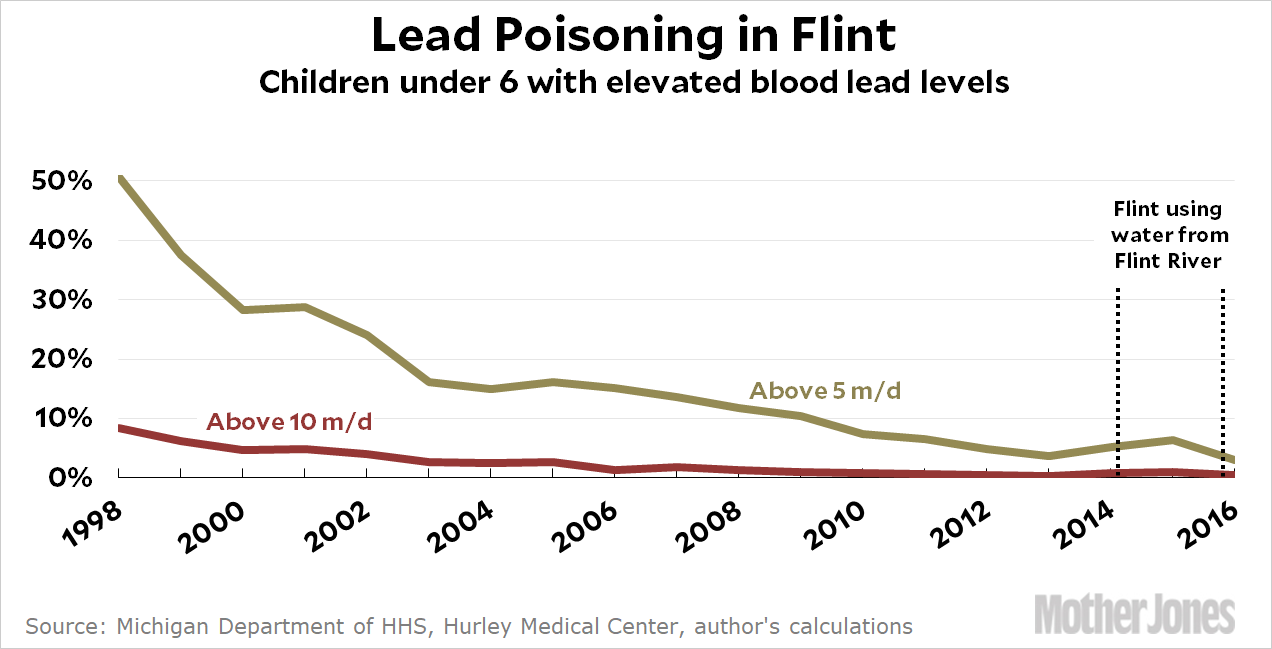
    But it’s still possible. However, there’s also this chart, which you may remember from last year:

    Although lead poisoning increased during the switch to Flint River water, it increased only to 2011 levels. Why would that cause fertility rates to plummet well below 2007 levels?

    One possibility is that it’s not lead at work here. There was other stuff in Flint’s water too, and it’s possible that some other poison caused this.

    But I’m skeptical that lead could be responsible. For one thing, fertility in Flint doesn’t show any kind of steady increase over the years as lead levels steadily declined. If lead really affected fertility, Flint women would have been virtually barren back in the 90s and earlier. For another thing, I’m not aware of any research showing a clear effect of lead poisoning on fertility rates—and certainly nothing showing the kind of huge and sharp change we see here. Finally, even if lead does cause a loss of fertility, the size of the response in Flint seems out of proportion to the actual change in lead levels.

    I’m not saying this research is wrong. There really is a lot of noise here, which makes analysis difficult. And there does seem to be a drop in fertility. So the authors might be onto something. But I’d take it with a grain of salt until someone else confirms it using an independent methodology.

  • Lunchtime Photo

    This is a lovely little gem of a waterfall on a creek a few miles north of Caherdaniel. I’m almost reluctant to post this picture because the colors are so vivid it looks like it’s a Disney cartoon or something. But it’s not a Photoshop hack job. As you all know, this is not because I’m above such crude trickery. It just wasn’t necessary. This is what it looked like almost straight out of the camera.

    “Almost” because these pictures are really hard to take in daylight. To get the velvety water effect, you need an exposure time of about eight seconds. This lets so much light into the camera that it’s nearly impossible to expose properly. Even with my smallest f-stop, lowest ISO setting, and a 64x neutral density filter, it was still overexposed. So I had to go into Photoshop to correct that. But that was all.

  • Wisconsin Is Going to Lose a Bundle on the Foxconn Deal

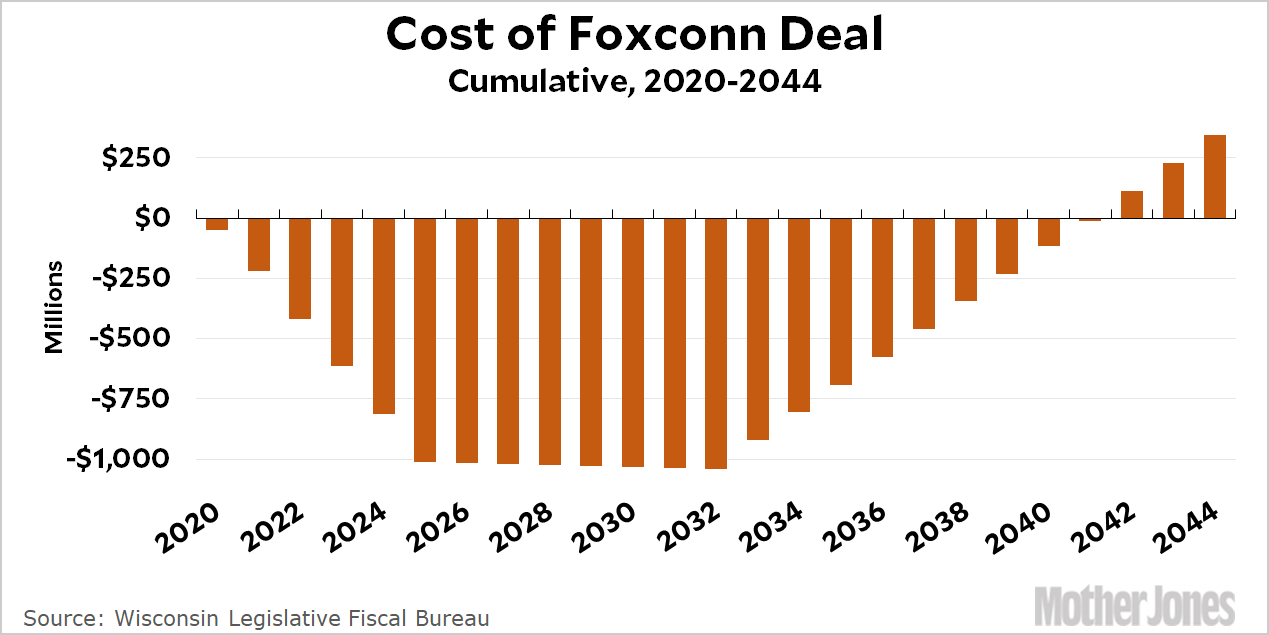
    It’s official: Wisconsin has approved a deal to bring a huge Foxconn facility to its state. The way this deal works is that Foxconn pays taxes to Wisconsin and Wisconsin provides Foxconn with refundable tax credits—that is, money that’s paid regardless of whether Foxconn has any tax liability. What this means is that it’s possible for Wisconsin to pay Foxconn more than Foxconn pays in taxes. In fact, it’s not only possible, it’s what they expect. Here’s what the deal looks like in cheese-colored chart form:

    According to estimates from the Legislative Fiscal Bureau, the money Wisconsin pays to Foxconn will be higher than the combined taxes they get directly from Foxconn and from workers at the Foxconn facility. This annual deficit won’t become positive until 2033. The cumulative deficit won’t become positive until 2042. And this all assumes that Foxconn produces the 13,000 jobs it says it will. If it doesn’t, the deal will look even worse for Wisconsin.

    Why enter a deal that’s certain to cost Wisconsin money in the short term and will only become profitable in the long term if Foxconn is still around in 25 years—a long time in the tech industry? Beats me. It allows Scott Walker to say that he’s a “jobs governor,” I suppose. And there’s apparently some hope that the Foxconn facility will become the hub of a new “Wisconn Valley.” This completely misunderstands both the nature of modern supply chains and the nature of the industries that made Silicon Valley a geographical hot spot.

    Until now, Wisconsin’s most famous product has been cheese. In the future, state Republicans hope that Wisconsin will be famous for assembling consumer tech products. In reality, their new most famous product is old-fashioned gullibility. They got taken to the cleaners.

  • The Cynicism Behind Graham-Cassidy Is Breathtaking

    Ron Sachs/CNP via ZUMA

    It’s hard to know how to react to the cynicism of the Graham-Cassidy health care bill. For starters, it’s as bad as all the other Republican repeal bills. Tens of millions of the working poor will lose insurance. Pre-existing conditions aren’t protected. Medicaid funding is slashed. Subsidies are slashed.

    But apparently that’s not enough. Republican senators (and President Trump, of course) obviously don’t care what’s in the bill. Hell, they’re all but gleeful in their ignorance. Nor is merely repealing Obamacare enough. Graham-Cassidy is very carefully formulated to punish blue states especially harshly. And if even that’s not enough, after 2020 it gives the president the power to arbitrarily punish them even more if he feels like it. I guess this makes it particularly appealing to conservatives. Finally, by handing everything over to the states with virtually no guidance, it would create chaos in the health insurance market. The insurance industry, which was practically the only major player to stay neutral on previous bills (doctors, nurses, hospitals, and everyone else opposed them) has finally had enough. Even if it hurts them with Republicans, Graham-Cassidy is a bridge too far:

    The two major trade groups for insurers, the Blue Cross Blue Shield Association and America’s Health Insurance Plans, announced their opposition on Wednesday to the Graham-Cassidy bill….“The bill contains provisions that would allow states to waive key consumer protections, as well as undermine safeguards for those with pre-existing medical conditions,’’ said Scott P. Serota, the president and chief executive of the Blue Cross Blue Shield Association.

    ….America’s Health Insurance Plans was even more pointed. The legislation could hurt patients by “further destabilizing the individual market” and could potentially allow “government-controlled single payer health care to grow,” said Marilyn B. Tavenner, the president and chief executive of the association. Without controls, some states could simply eliminate private insurance, she warned.

    Literally nobody in the health insurance industry likes this bill. The chaos and misery it would unleash are practically undebatable. It’s being passed for no reason except that Republicans have screwed up health care so epically that they have only a few days left to pass something, and Graham-Cassidy is something.

    If there’s any silver lining at all to this mess, it comes from AHIP’s Marilyn Taverner: the bill is so horrifically bad that it might allow “government-controlled single payer health care to grow.” That’s probably true. No matter how enamored they are of Donald Trump, the American public can be suckered only just so long. If you make things bad enough, eventually they’ll start to wonder why America is the only advanced country on the planet where health care sucks so badly. Maybe all those countries with single-payer health systems have a good idea after all?

    If that happens, I’ll be a happy camper. But I sure wish we didn’t have to do it on the backs of the poor and the sick.

  • The Big Fed Selloff Is About To Begin

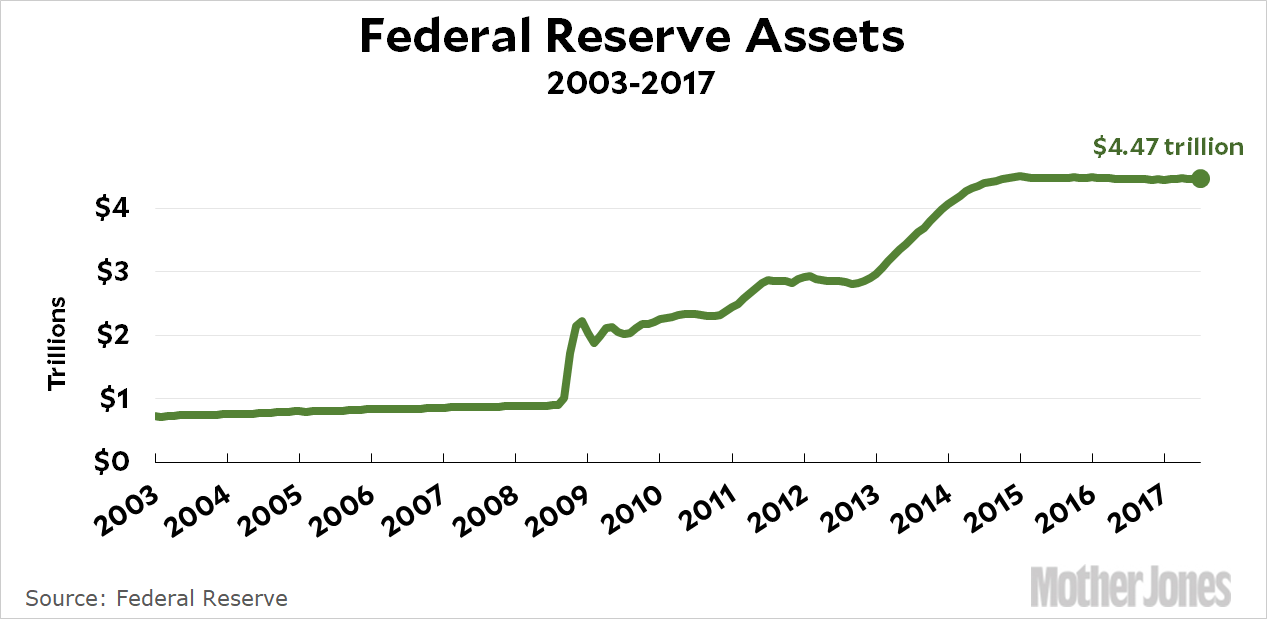
    The Fed announced today that the economy was in such whopping good shape that they plan to start selling off all the assets they accumulated as a result of three rounds of quantitative easing during the Great Recession. Is this a good idea? Is the economy really doing that great? That’s above my pay grade. To be honest, I don’t quite understand why they can’t just light the whole mess on fire and forget about it. Bad precedent, I suppose.

    Anyway, just to give you some context, here’s the job facing the Fed. They’ve got a lot of assets to get rid of. I guess we’ll find out soon enough if the economy is doing well enough that the Fed’s selloff doesn’t tank the stock and bond markets. Cross your fingers.